

The software development world is witnessing a profound shift as AI-powered code generation tools move from novelty to norm. In 2026, coding assistants like GitHub Copilot, OpenAI's ChatGPT, and Amazon's CodeWhisperer (now rebranded as Q Developer) have surged in popularity, fundamentally changing how developers write and maintain code.
Even tech giants are embracing this trend – Google's CEO recently revealed that over a quarter of all new code at Google is now generated by AI (with human review). This rapid uptake of AI in programming promises major productivity boosts, even as it raises new questions about code quality, security, and the evolving role of software developers.
Widespread Adoption Among Developers
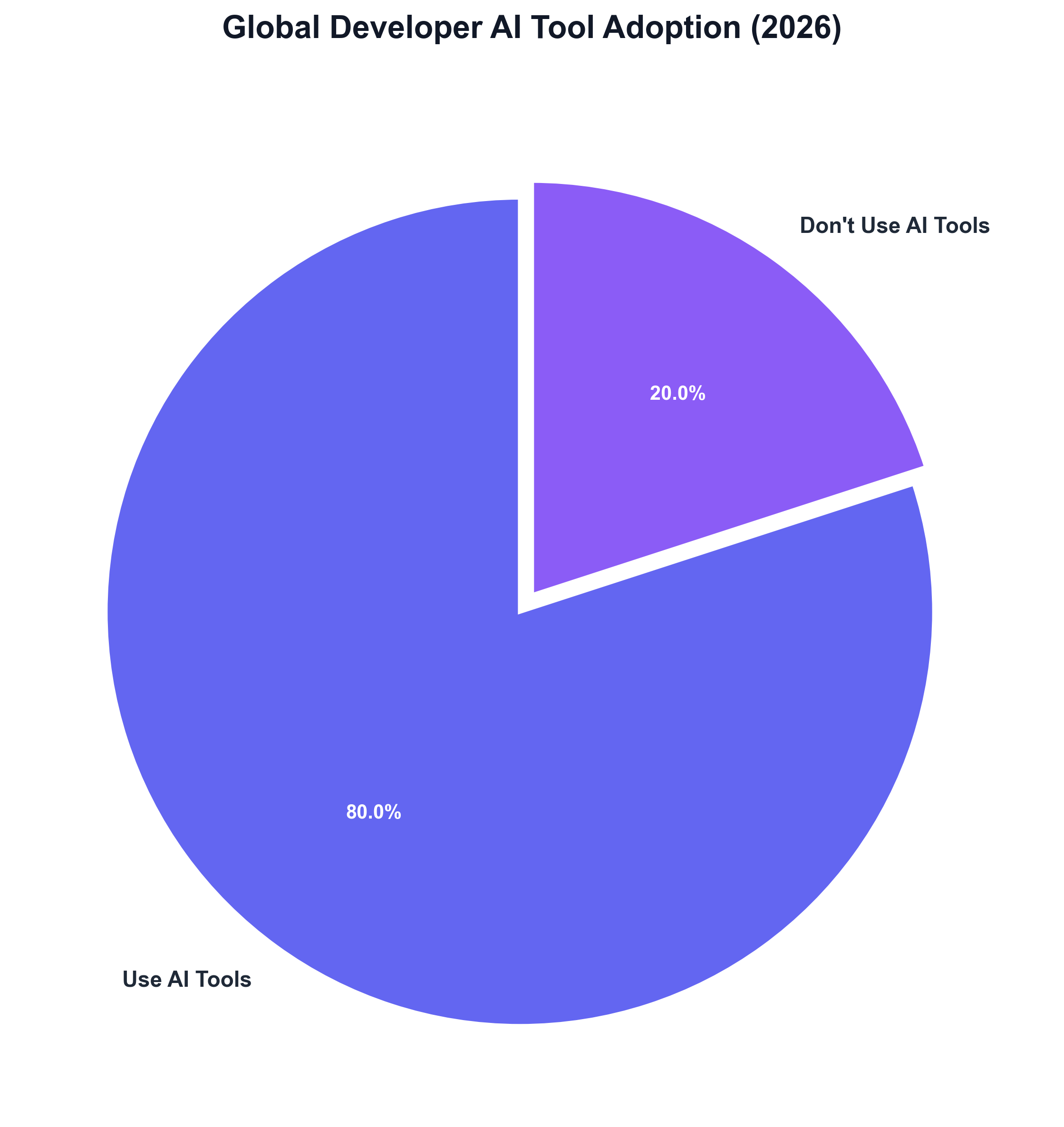
AI coding tools have quickly gone from experimental to essential in many developers' toolkits. Recent surveys indicate that most developers are now using AI assistance in their workflow. According to a 2024 Statista report, 80% of developers worldwide use AI when writing code.
In fact, a GitHub survey of 2,000 engineers found 97% had used AI coding tools at work at least once. Many programmers leverage these tools daily for tasks ranging from generating boilerplate code to debugging and documentation.
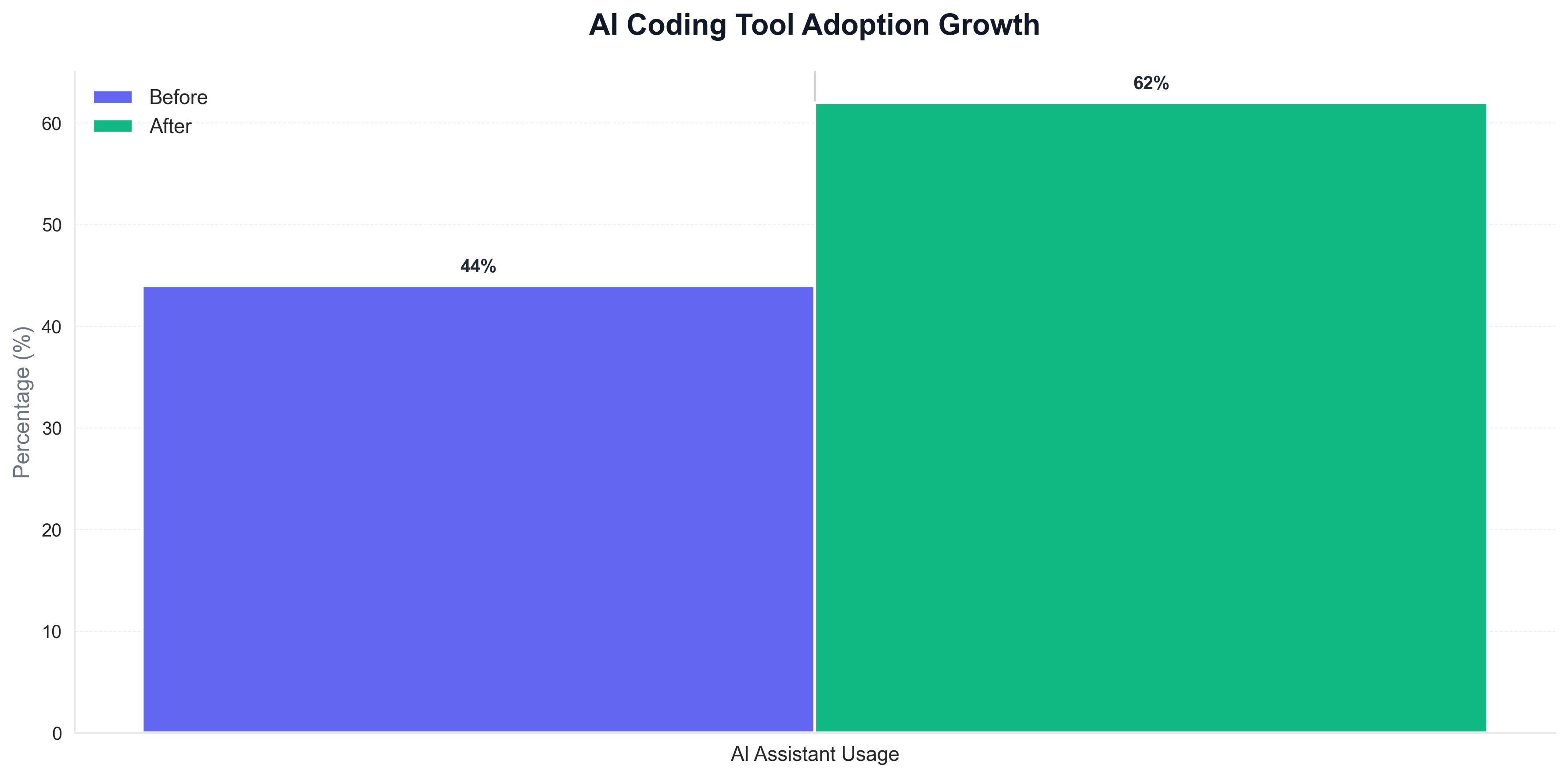
This represents a dramatic jump in adoption over just a couple of years. For example, Stack Overflow's 2024 developer poll showed regular use of AI assistants climbed from 44% of respondents in 2023 to 62% in 2024.
Among those using AI, a few platforms dominate: ChatGPT and GitHub Copilot are by far the most popular assistants, followed by newer entrants like Google's AI models and others.
Developers often turn to ChatGPT for help via natural language queries, while Copilot's IDE integration offers in-line code suggestions as they type.
Market Share Breakdown
A recent survey illustrates the competitive landscape of AI pair-programming tools:
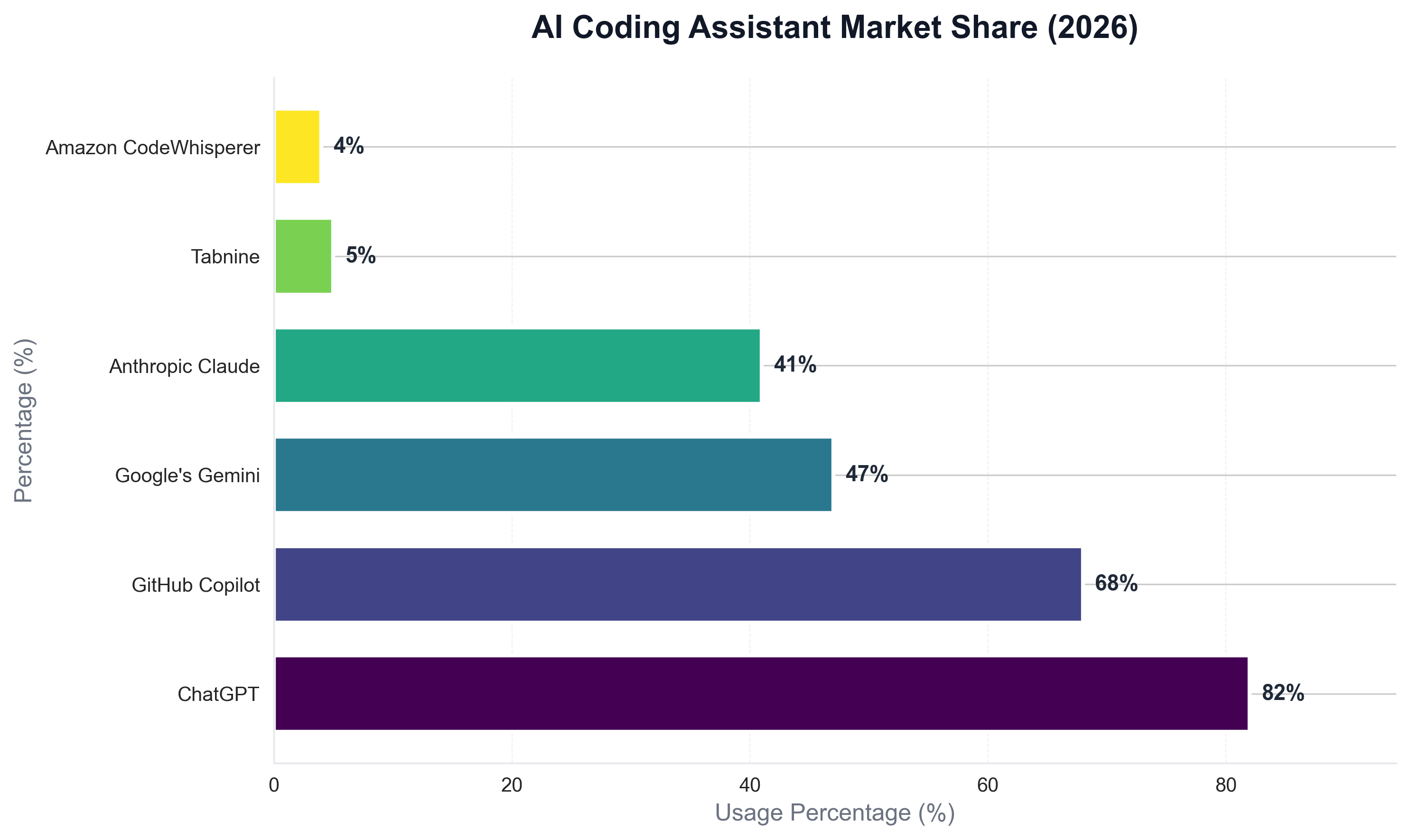
- ChatGPT: Used by ~82% of AI-augmented developers
- GitHub Copilot: Used by ~68% of AI-augmented developers
- Google's Gemini: Used by ~47% of AI-augmented developers
- Anthropic Claude: Used by ~41% of AI-augmented developers
- Tabnine: Used by ~5% of AI-augmented developers
- Amazon CodeWhisperer: Used by ~4% of AI-augmented developers
This reflects a market where a handful of major platforms dominate usage.
Tech Giants Double Down on AI Coding Tools
The growing importance of AI in development has prompted major tech companies to invest heavily in coding assistants – both for their own engineers and for customers:
GitHub Copilot (Microsoft)
Launched in late 2021, Copilot was the first big AI pair-programming tool on the scene. It's integrated into Visual Studio, VS Code, and other IDEs, autocompleting code and suggesting functions using OpenAI's models.
Copilot's user base has ballooned; as of 2024 it surpassed 1.8 million paying users, including tens of thousands of corporate teams. GitHub has continued to enhance Copilot (often dubbed "Copilot X"), adding an in-editor chat mode and support for voice commands, and upgrading its underlying AI to more advanced models.
These moves keep Copilot at the cutting edge, tightly coupling AI assistance with developers' daily workflow.
OpenAI ChatGPT
While not a dedicated coding tool, ChatGPT's impact on programming has been huge. Developers flock to this AI chatbot to get help with coding questions, generate snippets, or explain errors in plain language.
In a JetBrains survey, 69% of developers reported trying ChatGPT for coding help (49% use it regularly). Its conversational format makes it a versatile all-in-one assistant for troubleshooting and learning new technologies.
OpenAI's continual model improvements (such as GPT-4) and the introduction of a Code Interpreter mode (which can actually run code and return results) have further cemented ChatGPT as a go-to resource for programmers.
Amazon Q Developer (formerly CodeWhisperer)
Amazon's answer to Copilot was CodeWhisperer, released in 2022 as an AI code suggestion tool, especially tuned for AWS frameworks. In 2024, Amazon rebranded CodeWhisperer as "Q Developer", expanding it into a broader AI aide for developers.
Beyond completing code, Q Developer can now:
- Debug code
- Refactor code
- Scan for security issues
- Autonomously implement features using AI "agents"
For example, a developer can instruct Q Developer to add a new feature, and the AI will generate a plan, modify the codebase across files, and run tests.
Amazon's push here underscores the high stakes – their internal metrics showed CodeWhisperer had struggled to gain traction against Copilot's momentum, despite a free tier. The rebranding aimed to position Q as a more capable AI partner.
Early results are promising: Amazon reports that its generative AI coding assistant has drastically accelerated internal projects. In one initiative porting thousands of applications to a new runtime, Amazon's tool saved over 4,500 developer-years of effort and about $260 million in costs – a stunning validation of AI's potential in software development.
Google's Coding AI (Codey and Gemini)
Google has been integrating AI into its development tools somewhat more behind-the-scenes. They introduced an AI code completion called Codey on Google Cloud in 2023, and more recently Google's Gemini (a cutting-edge multi-modal model) is being offered to developers.
Notably, Google has begun rolling out Gemini models into third-party coding platforms – even announcing that Gemini is now available for use with GitHub Copilot.
Internally, Google's engineers are heavily augmented by AI as well. CEO Sundar Pichai revealed that more than 25% of new code at Google is authored by AI (then reviewed by humans). This "AI-first" development approach allows Google teams to move faster.
"Google's got advantages other companies don't – massive code repositories, cutting-edge AI tools, and the resources to implement this safely," notes Camden Woollven of GRC International, adding that while most companies won't hit 25% AI-generated code soon, "they're definitely heading in that direction."
Other Players
The AI coding arena is crowded beyond the big names. Replit's Ghostwriter assistant, Tabnine, Cursor, and JetBrains AI Assistant (built into PyCharm/IntelliJ) are all vying for developers' attention.
Even open-source models like Meta's Code Llama and BigCode's StarCoder have given developers who are cautious about proprietary AI an alternative for code generation. This proliferation of tools means developers in 2026 have a menu of AI assistants to choose from, whether they prioritize integration with their IDE, specific language support, or privacy of their code.
Productivity Boosts Fueling the Trend
Why are developers and companies so interested in AI pair programming? In a word: productivity. AI code assistants have demonstrated significant gains in development speed and efficiency:
Faster Coding and Fewer Mundane Tasks
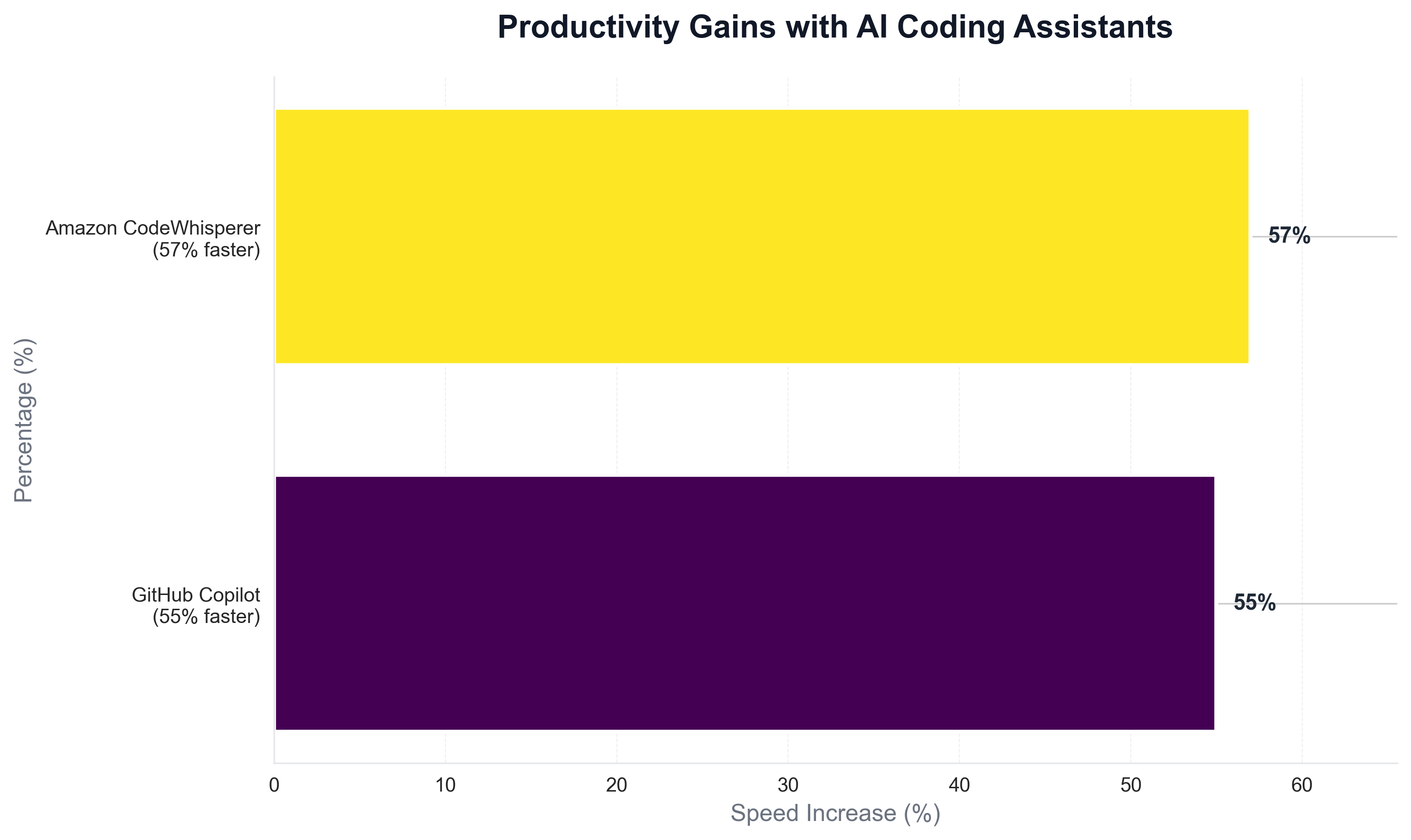
Studies show that with AI help, developers complete tasks in a fraction of the time. GitHub's research found using Copilot helped developers finish coding tasks ~55% faster on average. Similarly, Amazon observed that programmers using CodeWhisperer/Q were able to complete tasks 57% faster than those without AI assistance.
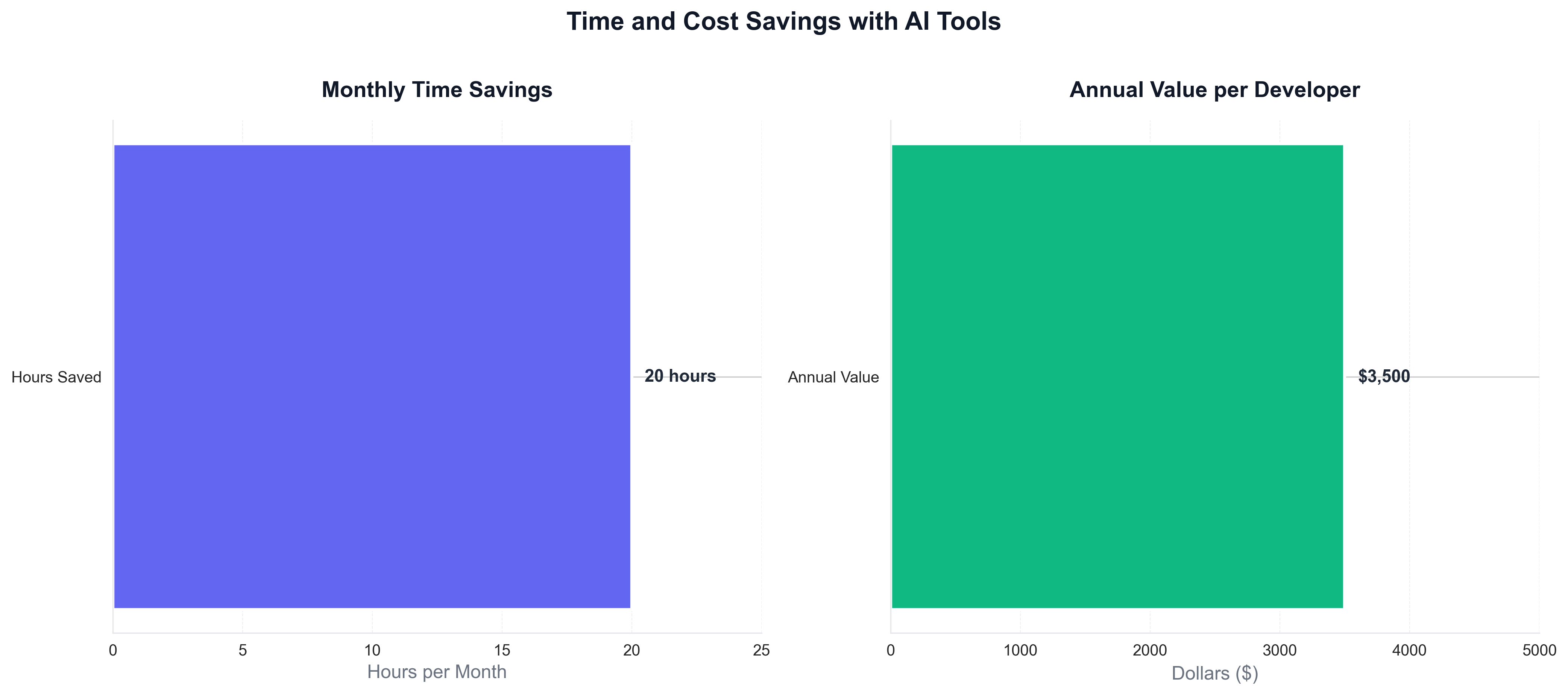
The time savings add up: one report noted developers save between 15 and 25 hours per month by using AI coding tools, equivalent to an extra $2,000–$5,000 worth of work annually per developer.
Routine chores like writing boilerplate code, converting formats, or generating repetitive test cases can be offloaded to the AI, letting human developers focus on more complex and creative aspects of software.
Higher Success Rates and Better Code Quality
Beyond speed, AI assistance can improve outcomes. GitHub Copilot users not only code faster but tend to get more tasks "right" on the first try. In one experiment, developers using Copilot had a 78% task success rate, versus 70% without it.
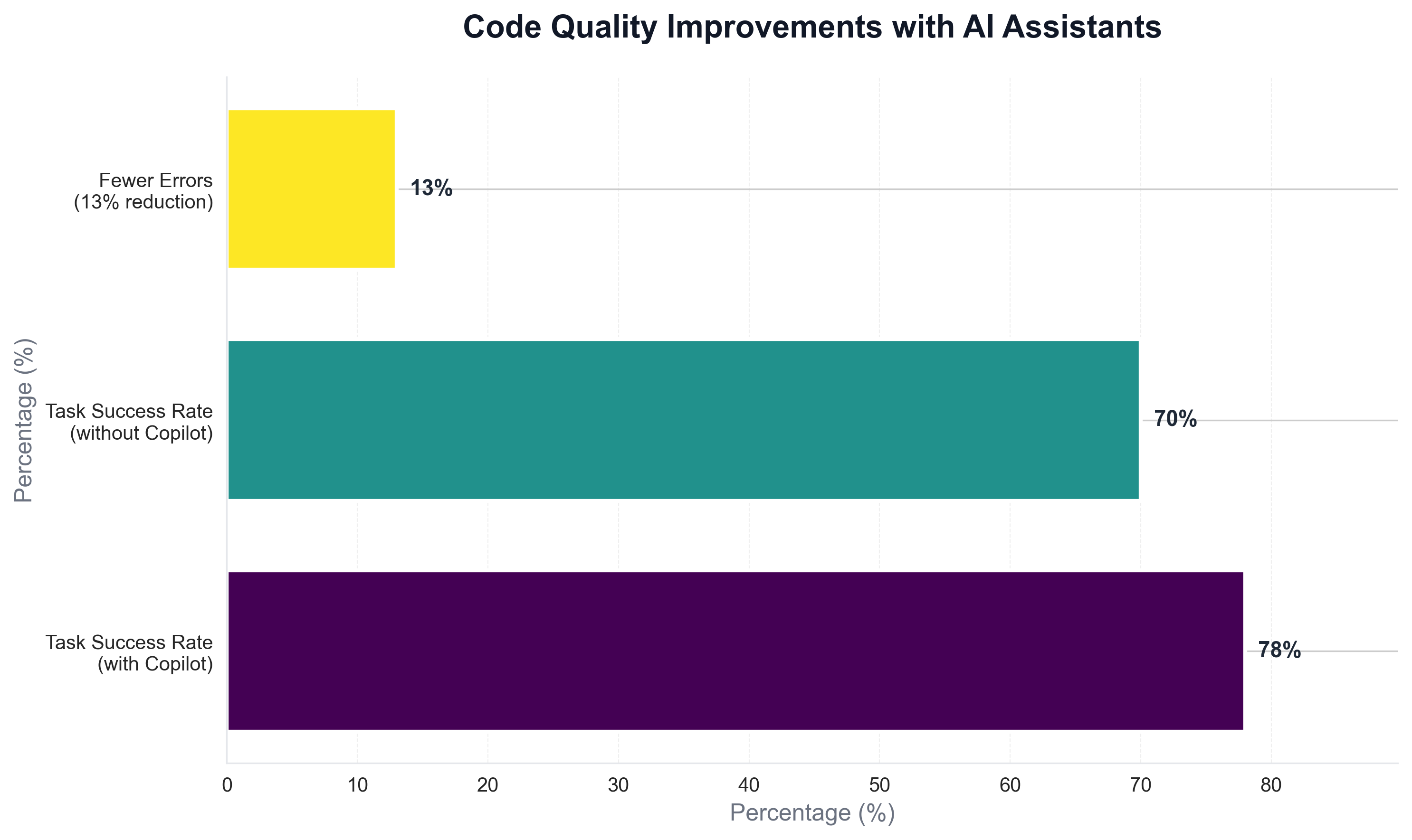
Code written with Copilot's help also contained about 13% fewer errors per line and was significantly more likely to pass unit tests on the first run. These quality boosts come from the AI's ability to instantly suggest solutions based on vast training data – often catching edge cases or bugs that a human might overlook.
AI tools also serve as on-demand mentors; they can explain code, suggest best practices, and flag potential issues (such as security vulnerabilities) in real-time. This is especially helpful for less experienced developers – it's like having a senior engineer pair-programming 24/7.
Notable ROI for Companies
For organizations, the productivity gains translate to real dollars saved. As mentioned earlier, Amazon's internal use of AI developers shaved years off project timelines and saved an estimated $260 million in a year.
Another survey found 83% of developers agree AI tools have improved their overall development productivity. Faster development cycles mean faster time-to-market for features, and higher-quality code means fewer bugs to fix later – both highly valuable to businesses.
It's no surprise that 63% of tech leaders reported increasing their budgets for generative AI in 2024 to capitalize on these benefits.
Concerns: Quality, Security & the Human Factor
For all the excitement, the rise of AI-generated code isn't without its challenges. Developers and engineering leaders are navigating some serious concerns alongside the enthusiasm:
Code Quality and Trust
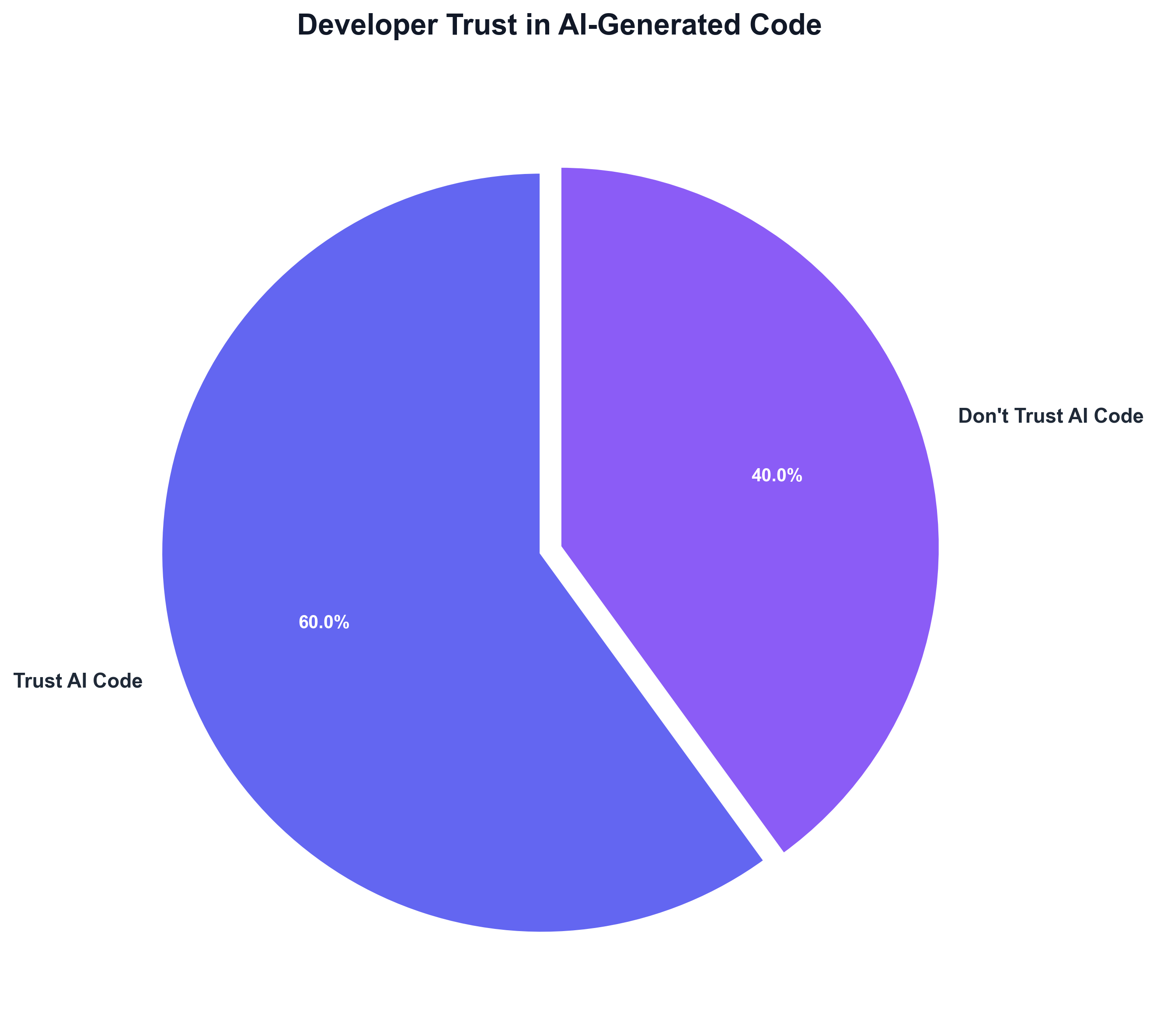
Not everyone is convinced that AI-written code is production-ready. Nearly 40% of developers do not fully trust AI-generated code's quality or maintainability, according to Google's own internal survey.
AI suggestions are based on patterns in training data, which means they might introduce subtle bugs or inefficient approaches that a human might catch with domain-specific knowledge. There's also the issue of "code churn" – some early studies (e.g. by GitClear) warned that AI-produced code might need to be rewritten more often, potentially doubling the amount of code that gets reworked later.
Seasoned engineers have reported that over-relying on AI can lead to a kind of "implementation amnesia", where developers accept suggestions without fully understanding the code, eroding their ability to troubleshoot issues down the line.
All of this underscores the importance of keeping a human in the loop: AI can draft code, but human judgment is needed to review, test, and maintain it.
Security Implications
Another major worry is security. AI models sometimes produce insecure code or even expose sensitive info from their training. A recent analysis cautioned that about 40% of AI-generated code contains vulnerabilities of some form.
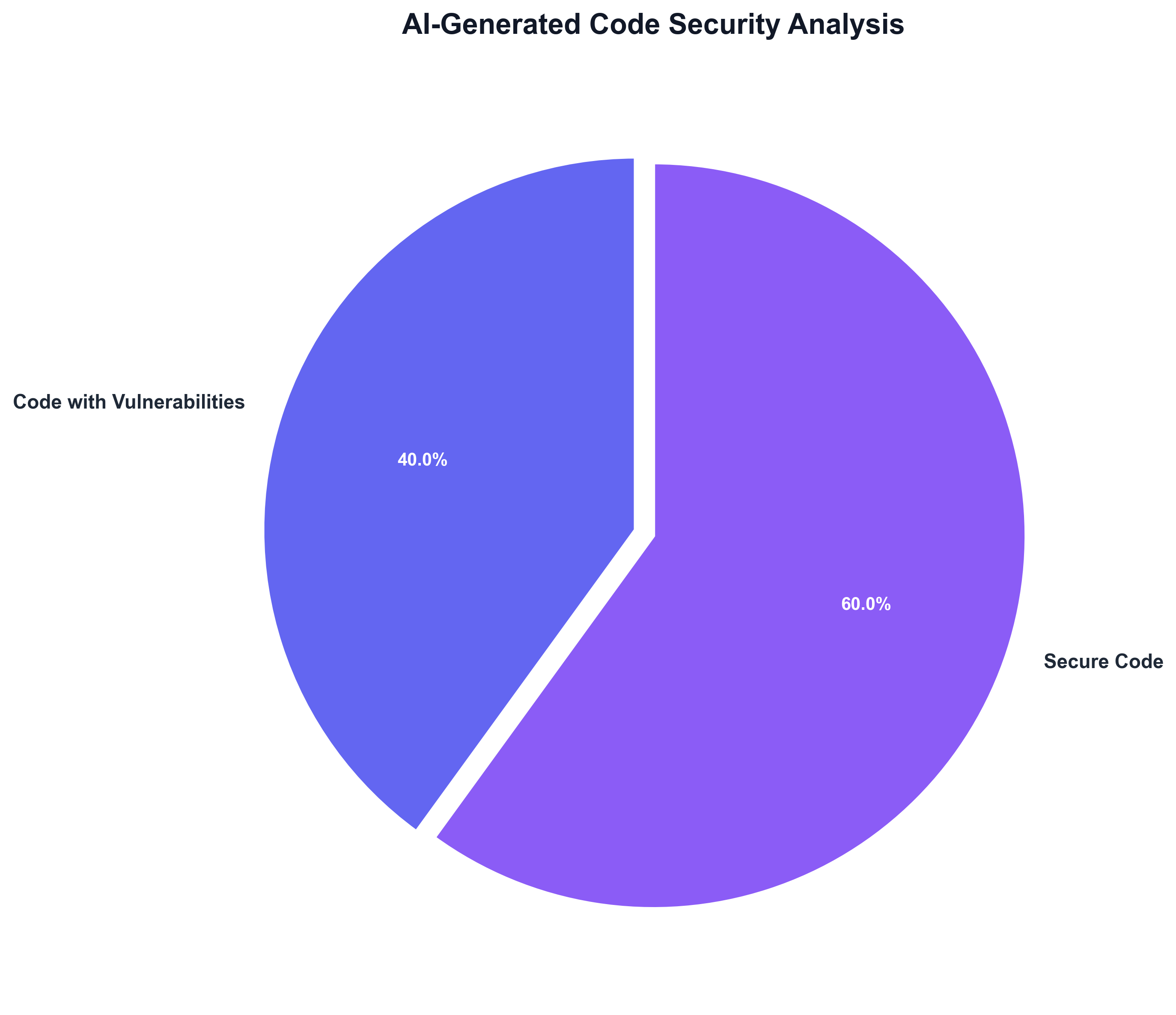
GitHub Copilot, for instance, has been shown to suggest known insecure coding patterns and even secrets (like API keys) that resemble those in its training data. In fact, GitHub projects using Copilot saw secret leakage at a slightly higher rate (6.4% of repos) compared to the norm (4.6%).
These statistics have raised eyebrows among security teams. In one poll, two-thirds of developers said they are increasingly concerned about the security and safety of AI-generated code.
Tool makers are responding by baking in more security checks – for example, Amazon's Q Developer now automatically scans for vulnerabilities and suggests fixes as it generates code. Still, the responsibility often falls on developers to audit AI contributions carefully, especially for mission-critical software.
Legal and Ethical Questions
The use of AI that's trained on open-source code has sparked debate about intellectual property. There are ongoing lawsuits and discussions about whether tools like Copilot might inadvertently violate licenses by regurgitating code snippets from public repositories.
Companies are adopting policies to restrict AI usage on sensitive codebases until these questions are resolved. Ethically, there's also concern about over-reliance on AI – could it reduce the development craft to just vetting AI output?
Many in the community argue that while AI can automate the grunt work, it cannot (and should not) replace human creativity and architectural decision-making. As one developer quipped, "AI won't take your job, but someone who knows how to leverage AI might."
The savvy programmer in 2026 is one who uses AI as a powerful assistant while applying their own expertise to ensure the final product is robust and innovative.
Changing Developer Roles & What's Next
Far from making developers obsolete, the rise of AI coding tools is transforming the developer's role. By handling routine tasks, AI frees developers to focus on higher-level design, critical problem-solving, and innovation.
As trivial coding burdens lighten, we're seeing a greater emphasis on skills like:
- System architecture
- Creative solution design
- Effective prompt engineering (i.e. knowing how to ask the AI the right questions)
In fact, entirely new roles are emerging – from AI code auditors (experts who review and refine AI-generated code) to prompt specialists who craft optimal queries for coding assistants.
Embracing AI Tools
Developers entering the field today are advised to embrace these tools, not shy away from them. Those who learn to work alongside AI can amplify their productivity and value.
"Your job will not be taken by AI. It will be taken by a person who knows how to use AI," quipped Christina Inge, a tech author, capturing a sentiment now echoing across the industry.
Forward-looking engineering teams are already training their staff on AI tool best-practices, establishing guidelines for when and how to use AI suggestions, and defining review processes to catch AI's mistakes.
The Future of AI Coding
Looking ahead, the AI coding assistant trend shows no sign of slowing. The models themselves are improving rapidly – e.g. OpenAI's next systems and Google's Gemini promise even more accuracy and multimodal capabilities for coding.
We can expect deeper integration of AI into every stage of the software lifecycle:
- Design
- Coding
- Testing
- DevOps
- Maintenance
Future IDEs might come with AI copilots by default. And as natural-language programming becomes more viable, we may inch closer to a world where anyone can "describe" an application and have working code generated, with developers orchestrating at a higher level.
Conclusion
In summary, 2026 marks an inflection point in software development. AI code generation tools have gone mainstream, yielding significant benefits in speed and productivity for those who adopt them.
Companies large and small are racing to integrate AI into their dev processes, while new tools and updates land almost monthly in this competitive space. Yet, it's a transformation that comes with caveats – requiring vigilance on quality, security, and the human aspects of coding.
For developers and tech-savvy readers, the message is clear: the code-writing bots are here to stay, so the key is learning how to harness them effectively. Those who do will help define the next era of software development, one where human creativity is amplified by our AI-powered partners in code.