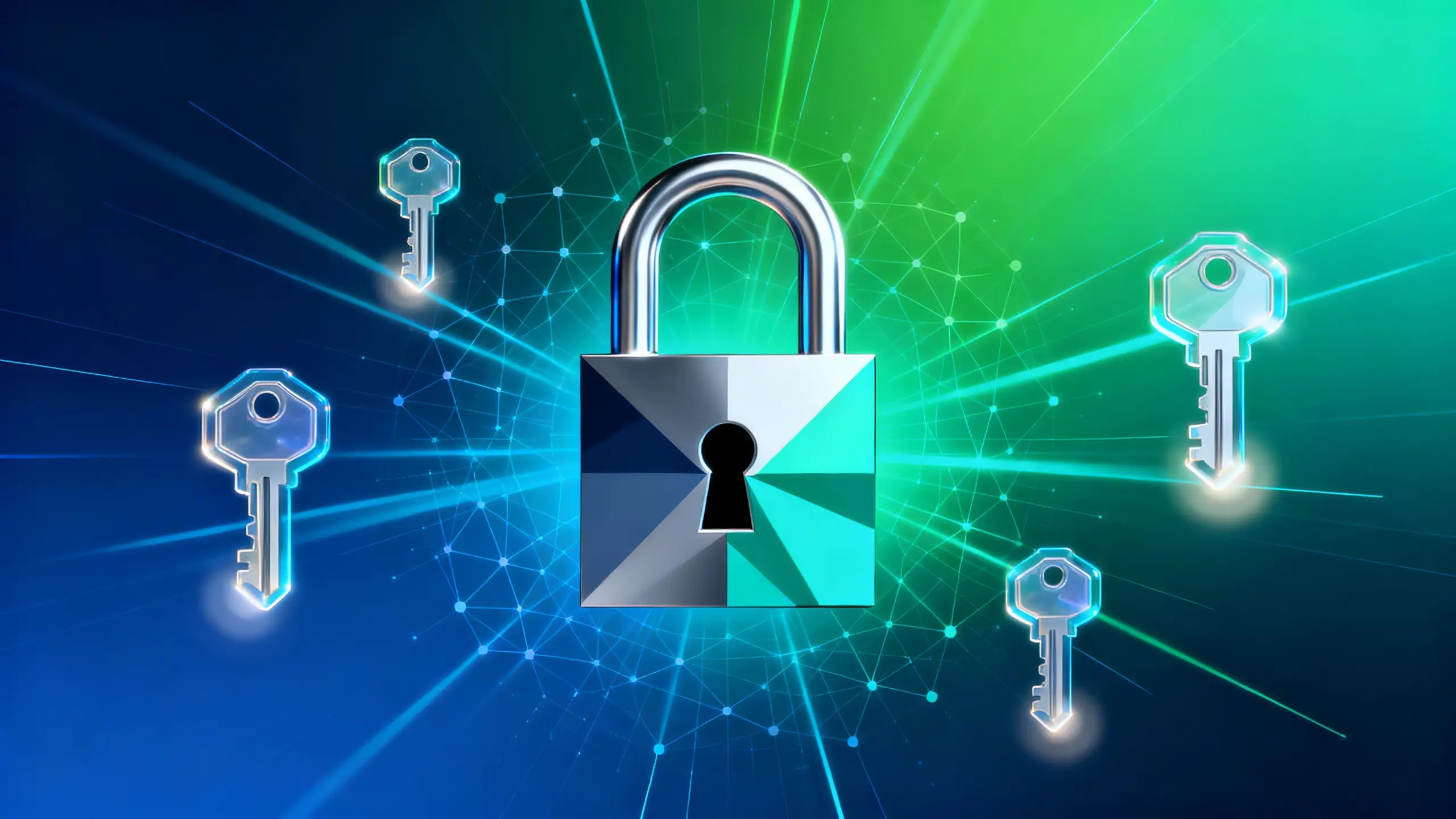

Confidential computing has transformed from an emerging security technology to an essential infrastructure component for enterprises deploying AI in 2026. According to Gartner's confidential computing analysis, over 60% of enterprises now require confidential computing capabilities for their cloud AI deployments, driven by increasing regulatory requirements and concerns about data exposure during processing. The technology addresses one of the most persistent gaps in data security: protecting information while it is being processed, not just at rest or in transit. With the global confidential computing market projected to reach $35 billion by 2028 according to Industry analysis, organizations are increasingly recognizing that traditional encryption approaches leave a critical vulnerability during computation.
The fundamental challenge that confidential computing solves stems from the reality that data must be decrypted to be processed. Traditional encryption protects data at rest (stored) and in transit (moving between systems), but when data enters a processor for calculation, it must exist in plaintext form—creating a window of exposure that sophisticated attackers can exploit. According to research from the Confidential Computing Consortium, this "data in use" vulnerability affects virtually every organization processing sensitive information, from healthcare records and financial data to proprietary AI models and trade secrets. The rise of cloud computing and AI has amplified these concerns, as organizations increasingly entrust third parties with data processing workloads that may involve valuable intellectual property.
Understanding Trusted Execution Environments
Trusted Execution Environments (TEEs) form the technical foundation of confidential computing, creating hardware-enforced secure enclaves within processors that protect data even from the host operating system and cloud provider. According to Intel's TEE technology overview, Intel Software Guard Extensions (SGX) creates enclaves that encrypt memory regions using hardware-based keys, ensuring that even administrators with physical access to servers cannot read protected data. This capability addresses threats ranging from malicious insiders and compromised hypervisors to sophisticated hardware attacks, providing protection levels that software-only solutions cannot match. The evolution of TEE technology has accelerated dramatically, with modern processors offering larger enclave sizes, faster encryption performance, and improved programmability.
AMD's Secure Encrypted Virtualization (SEV) takes a different approach, encrypting entire virtual machines rather than individual memory regions. According to AMD's SEV technology documentation, SEV encrypts VM memory using dedicated hardware, with the encryption keys managed by the AMD Secure Processor—a dedicated security co-processor that operates independently from the main CPU. This approach simplifies deployment for cloud workloads, as organizations can encrypt entire VMs without modifying application code. The latest SEV-SNP (Secure Nested Paging) adds protection against hypervisor-based attacks, addressing concerns about cloud tenant isolation that have limited some organizations' cloud adoption.
ARM TrustZone technology extends confidential computing to the massive ecosystem of ARM-based devices, from smartphones and tablets to IoT devices and edge servers. According to ARM's TrustZone overview, TrustZone creates a secure world alongside the normal world, enabling trusted applications to run in an isolated environment protected from the Rich Operating System. This capability has proven particularly valuable for mobile payment processing, digital rights management, and now edge AI inference, where sensitive models and data must be protected on devices that may be physically compromised. The adoption of ARM-based servers in data centers has also expanded TrustZone's relevance for enterprise workloads.
Confidential AI and Privacy-Preserving Inference
The intersection of confidential computing and artificial intelligence represents one of the most impactful applications in 2026, enabling organizations to process sensitive data with AI systems without exposing that data to the AI providers or cloud operators. According to Microsoft Azure Confidential Computing research, enterprises can now deploy large language models within confidential VMs that encrypt both the model weights and the user prompts throughout inference, ensuring that even Microsoft cannot access the processing occurring within the enclave. This capability addresses a fundamental barrier to AI adoption in regulated industries, where concerns about data exposure have limited the use of cloud-based AI services.
The technical implementation of confidential AI involves protecting multiple components within secure enclaves. According to Google Cloud's confidential computing approach, the AI model weights are loaded into encrypted memory at initialization, input data is decrypted only within the enclave for processing, and outputs are returned to users without exposure to the underlying infrastructure. This end-to-end protection extends to the entire inference pipeline, including tokenization, model execution, and post-processing. The performance overhead of confidential inference has decreased dramatically, with modern TEEs adding only 5-15% latency for most workloads compared to unprotected execution.
Federated learning has emerged as a complementary approach to confidential computing, enabling multiple parties to train AI models without sharing raw data. According to research on confidential federated learning, combining TEEs with federated learning provides defense-in-depth, protecting both the data during local training and the aggregated model updates during central processing. This combination has proven particularly valuable in healthcare, where institutions can collaborate on medical AI models without sharing patient records, and in financial services, where banks can build fraud detection models without exposing customer transaction histories.
Enterprise Adoption and Use Cases
Financial services have become leading adopters of confidential computing, driven by stringent regulatory requirements and the high value of their data assets. According to industry analysis from financial technology researchers, major banks are deploying confidential computing for processing mortgage applications, credit assessments, and anti-money laundering investigations, ensuring that sensitive financial data remains protected throughout decision-making workflows. The ability to prove to regulators that data was processed within secure enclaves has also simplified compliance with requirements like GDPR and PCI-DSS, reducing audit complexity while improving security posture.
Healthcare organizations are leveraging confidential computing to enable new forms of medical research collaboration that were previously impossible due to privacy concerns. According to healthcare AI research, hospitals and research institutions are using TEEs to share patient data for training diagnostic AI models while maintaining HIPAA compliance, with the secure enclaves providing cryptographic proof that data was processed without exposure. Cancer research initiatives have particularly benefited, with confidential computing enabling the analysis of genetic data across institutions without revealing individual patient information. The combination of privacy protection and research utility has accelerated medical AI development significantly.
Government agencies have also embraced confidential computing for protecting classified information and citizen data. According to government technology adoption reports, defense departments are using TEEs for processing sensitive intelligence data, while civilian agencies are deploying confidential computing for tax processing, social services, and law enforcement applications. The ability to maintain security across cloud and on-premise environments has proven particularly valuable for government IT modernization initiatives, where agencies must balance security requirements with the operational flexibility of hybrid cloud architectures.
Cloud Provider Offerings and Ecosystem
The major cloud providers have significantly expanded their confidential computing offerings in 2026, making TEEs accessible to organizations without specialized hardware expertise. According to AWS confidential computing services, Amazon now offers confidential VMs based on AMD SEV-SNP and Intel TDX (Trust Domain Extensions) across multiple instance types, enabling customers to encrypt entire virtual machines with minimal application modification. The pricing premium for confidential instances has decreased to approximately 15-25% above standard instances, down from 100%+ when the services launched, driving broader adoption across startup and enterprise segments.
Microsoft Azure's confidential computing platform has achieved particularly strong market traction, with the combination of Azure Kubernetes Service (AKS) and confidential containers enabling containerized AI workloads within TEEs. According to Azure confidential AI deployments, customers have deployed over 10,000 confidential AI endpoints processing sensitive data, with particular uptake in healthcare, financial services, and government sectors. The integration with Azure OpenAI Service has enabled enterprises to access large language models with additional security guarantees, addressing corporate concerns about sending proprietary data to AI providers.
Google Cloud'sConfidential Space initiative has focused on enabling secure multi-party computation, where multiple organizations can collaborate on data analysis without any party seeing others' raw data. According to Google's confidential multi-party research, this capability enables use cases like competitive intelligence analysis, supply chain optimization across competitors, and cross-border data processing that would otherwise be impossible due to regulatory or competitive constraints. The technical approach combines TEEs with cryptographic protocols, providing defense-in-depth for the most sensitive collaborative workloads.
Performance and Implementation Considerations
The performance characteristics of confidential computing have improved dramatically, though organizations must understand the trade-offs when planning deployments. According to performance benchmarking research, modern TEE-enabled processors achieve 85-95% of unprotected performance for memory-intensive AI inference workloads, with the primary overhead coming from memory encryption and enclave boundary transitions. Applications that heavily utilize encrypted memory regions may experience higher overhead, particularly for large model inference where frequent memory access patterns interact with encryption operations.
Implementation complexity remains a consideration, though tooling has improved significantly. According to confidential computing implementation guides, organizations should begin with attestation—the process of verifying that code is running within a genuine TEE before entrusting sensitive data. This involves measuring the software payload and platform configuration, generating a signed attestation report that remote parties can verify. Modern frameworks like Open Enclave SDK and Graphene provide abstraction layers that simplify attestation and enclave development, reducing the expertise required to build confidential applications.
Memory limits within enclaves present challenges for large AI models, though techniques like memory streaming and enclave swapping are addressing these constraints. According to memory management research for TEEs, models exceeding enclave memory capacity can be loaded in chunks, with only active layers resident in encrypted memory at any time. This approach introduces latency but enables confidential inference for models that would otherwise exceed TEE capacity. The trend toward larger enclave sizes in next-generation processors will further reduce these limitations, with Intel's upcoming processors expected to support multi-terabyte encrypted memory regions.
Future Directions and Emerging Capabilities
The evolution of confidential computing points toward larger enclaves, stronger isolation, and broader application scope. According to roadmap analysis from processor vendors, next-generation TEEs will support dedicated AI accelerators within secure enclaves, enabling confidential inference with specialized hardware that was previously impossible. These processors will also feature improved side-channel resistance, addressing academic concerns about potential information leakage through timing or power analysis attacks.
The integration of confidential computing with emerging privacy-preserving technologies is creating new possibilities for secure collaboration. According to research on combined approaches, the combination of TEEs with zero-knowledge proofs and secure multi-party computation enables scenarios where parties can verify computations occurred correctly without revealing inputs or seeing intermediate results. This capability has profound implications for AI accountability, enabling auditors to verify that models were trained on appropriate data without accessing the training set.
The regulatory landscape is also evolving to recognize confidential computing as an approved security measure. According to regulatory guidance documents, several European data protection authorities have issued guidance indicating that data processed within certified TEEs may receive reduced regulatory burden, as the technical protection measures provide equivalent security to other recognized approaches. This regulatory clarity is driving adoption in highly regulated industries that previously hesitated to move sensitive workloads to cloud environments.
Confidential computing has established itself as essential infrastructure for the AI era, providing the missing piece in the data protection puzzle by securing information during the most vulnerable phase: processing. As AI systems become more capable and handle increasingly sensitive data, the demand for confidential computing will only accelerate. Organizations that embrace this technology now will be well-positioned to take advantage of AI capabilities while maintaining the security and privacy controls that regulators and customers increasingly demand.