

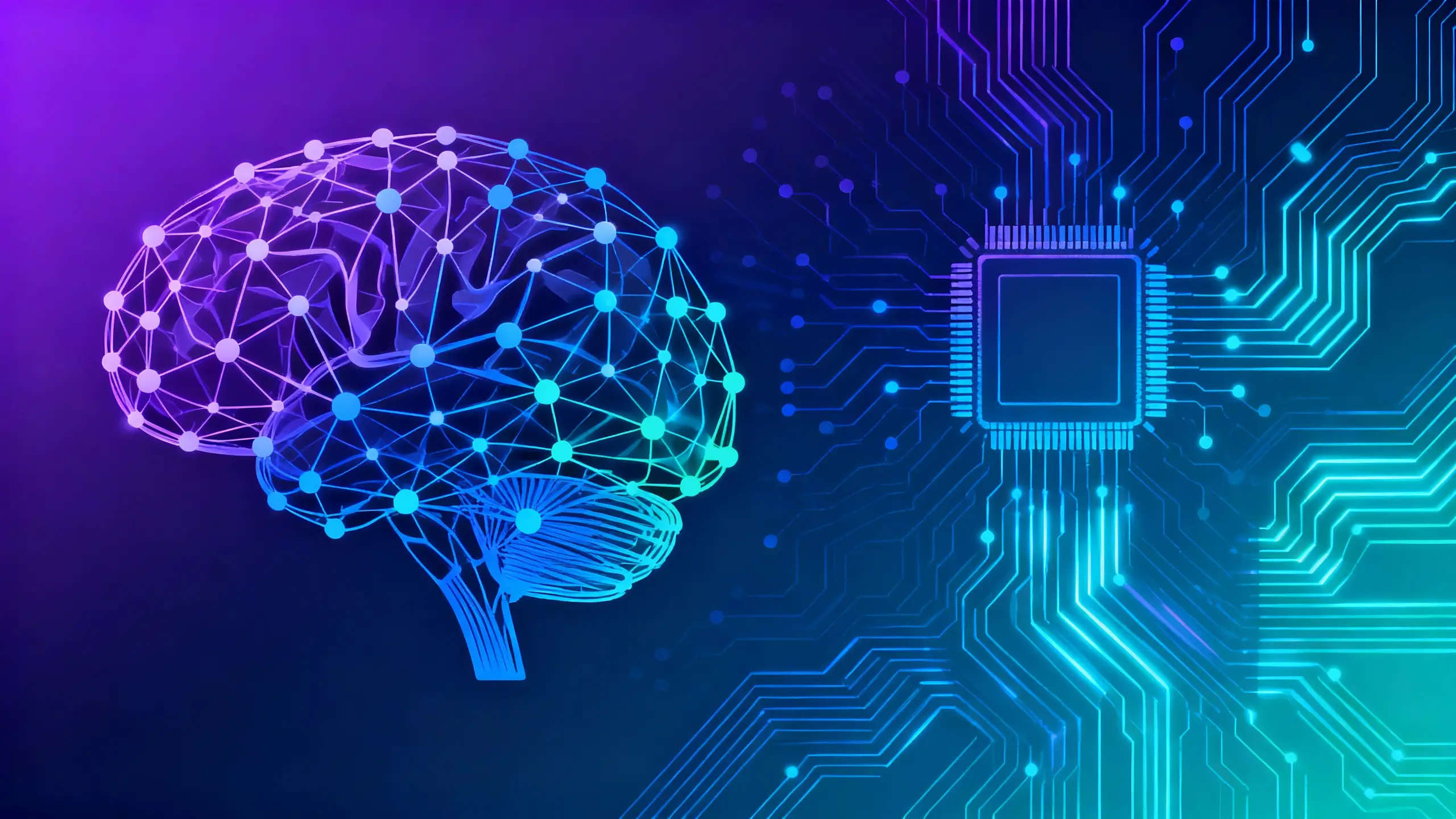
Neuromorphic computing has emerged as one of the most promising solutions to AI's massive energy consumption problem, achieving breakthroughs in 2026 that demonstrate the viability of brain-inspired hardware for sustainable artificial intelligence. The human brain performs extraordinary cognitive feats while consuming only approximately 20 watts of power, inspiring researchers to develop neuromorphic chips that mimic the brain's architecture and achieve similar efficiency. According to Intel's neuromorphic computing research, Intel's Hala Point system, deployed at Sandia National Laboratories, represents the world's largest neuromorphic system with 1.15 billion neurons and demonstrates over 10x more neuron capacity and up to 12x higher performance than previous systems, achieving efficiency exceeding 15 trillion 8-bit operations per second per watt.
The urgency of neuromorphic computing's development is underscored by the staggering energy costs of conventional AI. According to research cited by PMC, training GPT-3 required energy equivalent to powering 120 houses for a year, while GPT-4 required roughly 50 times more energy. Neuromorphic systems offer a fundamentally different approach, using spiking neural networks that communicate through discrete events rather than continuous values, enabling 2-3x better energy efficiency for temporal processing tasks and 1,000x more efficient neural communication within chips compared to conventional architectures. Recent breakthroughs in 2025-2026 have demonstrated neuromorphic systems achieving 70x faster performance and 5,600x greater energy efficiency than GPU-based edge AI systems for continual learning tasks, positioning brain-inspired computing as a critical technology for sustainable AI development.
The Brain as Inspiration: Why Neuromorphic Computing Matters
The human brain represents an extraordinary computing system that processes vast amounts of information, learns continuously, and adapts to new situations while consuming minimal energy. Neuromorphic computing seeks to replicate the brain's architecture and principles in silicon, creating chips that operate more like biological neural networks than traditional von Neumann computers. The key insight is that brains use event-driven computation where neurons fire spikes only when necessary, rather than continuously processing data like conventional processors. This sparsity and event-driven nature enables dramatic energy savings while maintaining computational capability.
According to Nature's coverage of neuromorphic computing at scale, the field has progressed from proof-of-concept demonstrations to large-scale systems capable of real-world applications. The fundamental principles include asynchronous event-driven processing, massive parallelism, local memory and computation (avoiding the von Neumann bottleneck), and plasticity (the ability to adapt and learn). These principles enable neuromorphic systems to achieve energy efficiency that rivals or exceeds biological brains while scaling to sizes that enable simulation of entire brain regions or even complete small brains.
The energy efficiency advantage becomes critical as AI models grow larger and training costs escalate. Research from the Human Brain Project demonstrated that Intel's Loihi neuromorphic chip achieved 2-3 times better energy efficiency than conventional AI systems for temporal processing tasks, with intra-chip neural communication showing 1,000 times greater efficiency than inter-chip communication. This efficiency advantage compounds at scale, making neuromorphic systems increasingly attractive for edge AI, robotics, brain-machine interfaces, and large-scale brain simulation where energy constraints are critical.
Intel Loihi 2 and Hala Point: Scaling Neuromorphic Systems
Intel has been a leader in neuromorphic computing development, with its Loihi processors representing some of the most advanced commercial neuromorphic chips available. According to Intel's neuromorphic computing resources, Loihi 2 offers up to 10x faster processing than its predecessor and comes with Lava, an open-source software framework for developing neuro-inspired applications. The Kapoho Point board combines 8 Loihi 2 chips to handle AI models with up to one billion parameters, demonstrating that neuromorphic systems can scale to handle substantial neural networks.
The Hala Point system, deployed at Sandia National Laboratories in April 2024, represents Intel's most ambitious neuromorphic deployment to date. According to Intel's announcement, Hala Point contains 1.15 billion neurons across 1,152 Loihi 2 processors, achieving over 10x more neuron capacity and up to 12x higher performance than Intel's first-generation system. The system supports 20 petaops (20 quadrillion operations per second) with efficiency exceeding 15 trillion 8-bit operations per second per watt, rivaling GPU and CPU architectures while consuming far less power for event-driven workloads.
Hala Point demonstrates the scalability of neuromorphic computing for real-world applications. The system can simulate brain regions, process sensor data streams in real-time, and run spiking neural networks for robotics and autonomous systems. Intel's open-source Lava framework enables researchers and developers to program Hala Point and other Loihi-based systems, accelerating the development of neuromorphic applications. The combination of hardware scale and software tools positions Intel's neuromorphic platform as a leading solution for brain-inspired computing research and applications.
IBM TrueNorth and Alternative Neuromorphic Architectures
IBM's TrueNorth chip, while earlier in development than Intel's Loihi, demonstrated important principles of neuromorphic computing and achieved remarkable energy efficiency. According to analysis of neuromorphic computing platforms, TrueNorth delivers approximately 46 billion synaptic operations per second per watt, showcasing the potential for ultra-low-power neural processing. TrueNorth uses a digital CMOS design with a mesh network of neurosynaptic cores, each containing neurons, synapses, and routing logic, enabling massively parallel neural computation.
Academic and research institutions have developed additional neuromorphic platforms including SpiNNaker (Spiking Neural Network Architecture) and BrainScaleS, which use different approaches to brain-inspired computing. SpiNNaker uses conventional processors configured to simulate spiking neural networks, while BrainScaleS uses analog circuits to directly emulate biological neurons and synapses. These diverse approaches reflect the experimental nature of neuromorphic computing and the search for optimal architectures that balance biological fidelity, energy efficiency, and computational capability.
Recent architectural innovations include NeuroScale, a decentralized neuromorphic architecture that demonstrates advantages over IBM TrueNorth and Intel Loihi's global synchronization approaches. According to research published in Nature Communications, NeuroScale offers better scalability through distributed event-driven synchronization, avoiding bottlenecks that can limit performance in large-scale neuromorphic systems. This innovation reflects ongoing evolution in neuromorphic architecture design as the field matures and addresses challenges of scaling to ever-larger systems.
Wafer-Scale Neuromorphic Systems: The Next Frontier
Wafer-scale integration represents a major innovation in neuromorphic computing, replacing PCB-level interconnects with high-density on-chip integration to enable unprecedented scale and efficiency. According to research on wafer-scale neuromorphic systems, DarwinWafer achieves 4.9 pJ/SOP (picojoules per synaptic operation) at 100 watts, capable of simulating complete biological brains including two zebrafish brains per chiplet and a mouse brain across 32 chiplets. This wafer-scale approach enables direct simulation of entire brain connectomes at biological timescales, opening new possibilities for neuroscience research and brain-inspired AI.
Wafer-scale systems address key limitations of multi-chip neuromorphic architectures by eliminating inter-chip communication bottlenecks and enabling dense, high-bandwidth neural connectivity. The integration of millions or billions of neurons on a single wafer enables simulation of brain regions and circuits that would be impractical with discrete chips. This capability is particularly valuable for neuroscience research, where understanding brain function requires simulating complete neural circuits and networks rather than isolated components.
The efficiency of wafer-scale systems makes them attractive for both research and commercial applications. The ability to simulate complete brains or large brain regions in real-time or faster-than-real-time enables new approaches to understanding neural computation, developing brain-machine interfaces, and creating AI systems that more closely mimic biological intelligence. As wafer-scale fabrication techniques improve and costs decrease, these systems may become practical for commercial deployment in specialized applications requiring extreme energy efficiency and neural-scale computation.
Real-Time Brain Simulation: From Fruit Flies to Mammals
One of the most dramatic demonstrations of neuromorphic computing's capabilities is real-time simulation of complete biological brains. According to research on biological brain simulation, researchers successfully simulated a complete fruit fly brain connectome (140,000 neurons and 50 million synapses) on Loihi 2 hardware, demonstrating orders of magnitude faster performance than conventional computing while maintaining biological accuracy. This achievement represents a milestone in computational neuroscience, enabling researchers to study brain function at scales and speeds that were previously impossible.
The fruit fly brain simulation demonstrates that neuromorphic systems can handle the complexity and connectivity of biological neural networks while operating efficiently enough for real-time or faster-than-real-time simulation. This capability enables closed-loop experiments where simulated brains interact with virtual or physical environments, providing insights into how neural circuits process information, learn, and adapt. The ability to simulate complete brains also enables testing of brain-machine interfaces and neural prosthetics in simulation before deployment in biological systems.
Scaling from fruit flies to larger brains represents an ongoing challenge and opportunity. Mouse brains contain approximately 70 million neurons and 100 billion synapses, while human brains contain approximately 86 billion neurons and 100 trillion synapses. Current neuromorphic systems can simulate mouse-scale brains, and wafer-scale systems may enable simulation of larger brain regions or simplified human brain models. The combination of neuromorphic hardware and detailed brain connectome data from neuroscience research creates possibilities for understanding brain function and developing brain-inspired AI systems that more closely match biological intelligence.
Continual Learning and Edge AI Applications
Neuromorphic computing excels at continual learning, the ability to learn new tasks without forgetting previous knowledge, which is a major limitation of conventional deep learning systems. According to research on continual learning with spiking neural networks, a new spiking neural network architecture (CLP-SNN) implemented on Loihi 2 achieved 70x faster performance and 5,600x greater energy efficiency than GPU-based edge AI systems for online continual learning tasks. This dramatic efficiency advantage makes neuromorphic systems ideal for edge AI applications where devices must learn and adapt continuously while operating under strict power constraints.
Edge AI applications including robotics, autonomous vehicles, IoT devices, and wearable technology benefit from neuromorphic computing's combination of low power consumption, real-time processing, and continual learning capability. Robots using neuromorphic processors can adapt to new environments and tasks without requiring cloud connectivity or extensive retraining. Autonomous vehicles can process sensor data and make decisions using neuromorphic systems that consume far less power than conventional processors, extending battery life and reducing cooling requirements.
The event-driven nature of neuromorphic computing makes it particularly well-suited for processing sensor data streams where information arrives asynchronously and sparsely. Vision systems, audio processing, tactile sensors, and other sensory inputs generate event streams that map naturally to spiking neural networks. Neuromorphic processors can process these streams efficiently, detecting patterns, making predictions, and triggering actions with minimal latency and energy consumption. This capability positions neuromorphic computing as a key technology for the next generation of edge AI systems that must operate autonomously, learn continuously, and conserve energy.
Spiking Neural Networks: The Software Foundation
Spiking neural networks (SNNs) represent the software foundation of neuromorphic computing, using discrete spikes rather than continuous values to represent and transmit information. SNNs more closely mimic biological neural networks than conventional artificial neural networks, enabling more efficient computation and natural integration with neuromorphic hardware. According to analysis of neuromorphic computing state-of-the-art, recent advances include surrogate gradient training methods that enable training SNNs using backpropagation-like algorithms, and biologically plausible learning rules that enable on-chip learning without external computation.
Training spiking neural networks presents unique challenges because spikes are discrete events rather than differentiable values, making traditional gradient-based optimization difficult. Surrogate gradient methods address this by using smooth approximations of spike functions during training, enabling effective learning while maintaining the efficiency benefits of spiking computation. These methods have enabled SNNs to achieve competitive accuracy with conventional neural networks on many tasks while consuming far less energy during inference.
Biologically plausible learning rules, including spike-timing-dependent plasticity (STDP) and variants, enable neuromorphic systems to learn directly on-chip without requiring external computation or memory. This capability enables continual learning and adaptation in deployed systems, making neuromorphic processors self-contained learning systems rather than fixed inference engines. The combination of efficient spiking computation and on-chip learning creates possibilities for AI systems that adapt and improve continuously while operating under strict energy constraints.
Energy Efficiency: Addressing AI's Sustainability Crisis
The energy consumption of AI training and inference has become a critical sustainability concern as models grow larger and deployment scales increase. Neuromorphic computing offers a path toward more sustainable AI by fundamentally changing how computation occurs. The event-driven, sparse, and massively parallel nature of neuromorphic systems enables dramatic reductions in energy consumption compared to conventional processors for workloads that match neuromorphic strengths.
According to research on AI energy costs, the energy required to train large language models has grown exponentially, with GPT-4 requiring roughly 50 times more energy than GPT-3. This trend is unsustainable as AI models continue to grow and deployment scales increase. Neuromorphic computing provides an alternative path where efficiency improves with scale rather than degrading, as larger neuromorphic systems can leverage sparsity and parallelism more effectively.
The efficiency advantages of neuromorphic computing extend beyond training to inference, where most AI computation occurs. Edge AI devices using neuromorphic processors can operate for extended periods on battery power, enabling new classes of applications including always-on sensors, autonomous robots, and wearable AI systems. Data centers using neuromorphic systems for certain workloads can reduce cooling requirements and power consumption, contributing to more sustainable AI infrastructure. As neuromorphic computing matures and adoption increases, it may play a crucial role in enabling AI development that is both more capable and more sustainable.
Challenges and Future Directions
Despite significant progress, neuromorphic computing faces challenges on the path to mainstream adoption. Software ecosystem maturity remains a limitation, as tools and frameworks for neuromorphic computing are less developed than those for conventional processors. Programming neuromorphic systems requires understanding spiking neural networks and event-driven computation, which represents a learning curve for developers accustomed to traditional programming models. Intel's Lava framework and other open-source tools are addressing this challenge, but broader ecosystem development is needed.
Hardware availability and cost are also considerations. Neuromorphic processors are currently produced in smaller volumes than conventional processors, leading to higher costs and limited availability. As adoption increases and manufacturing scales, costs should decrease, but neuromorphic systems may remain specialized solutions for specific applications rather than general-purpose processors. The optimal applications for neuromorphic computing are those that benefit from event-driven processing, continual learning, and extreme energy efficiency, which represents a subset rather than replacement of all computing workloads.
Performance and accuracy comparisons with conventional AI systems are complex because neuromorphic systems excel at different types of tasks. For temporal processing, continual learning, and sparse event streams, neuromorphic systems can achieve superior efficiency and performance. For dense matrix operations and batch processing, conventional processors may remain more efficient. The future likely involves hybrid systems that combine neuromorphic and conventional processors, using each where it excels.
Research directions include improving training methods for spiking neural networks, developing larger and more efficient neuromorphic systems, creating better software tools and frameworks, and exploring new materials and architectures including memristors and photonic processors. The field is advancing rapidly, with new breakthroughs and capabilities emerging regularly as researchers push the boundaries of brain-inspired computing.
Conclusion: The Neuromorphic Computing Revolution
Neuromorphic computing has reached a critical inflection point in 2026, with systems like Intel's Hala Point demonstrating that brain-inspired hardware can scale to billions of neurons while achieving remarkable energy efficiency. The ability to simulate complete biological brains, enable continual learning at the edge, and dramatically reduce AI energy consumption positions neuromorphic computing as a transformative technology for sustainable artificial intelligence. As the field matures and adoption increases, neuromorphic systems may become essential components of next-generation AI infrastructure, enabling capabilities that are impractical or impossible with conventional processors.
The convergence of neuroscience research, advanced semiconductor manufacturing, and AI development is creating unprecedented opportunities for brain-inspired computing. Real-time brain simulation, ultra-efficient edge AI, and sustainable data center computing represent just the beginning of neuromorphic computing's potential. The coming years will see continued scaling, improved software tools, and broader adoption as the technology proves its value across diverse applications. For an AI industry facing sustainability challenges and seeking new capabilities, neuromorphic computing offers a path forward that is both more efficient and more aligned with the biological intelligence that inspires it.