
Direct air capture technology has reached a critical inflection point in 2026, transitioning from experimental demonstrations to commercial-scale deployment with breakthrough cost reductions that make carbon removal economically viable. According to Airhive's announcement, the company's 1,000-tonne-per-year system in Alberta, Canada achieved costs below $500 per tonne in 2026, representing a dramatic reduction from the current $1,000+ per tonne industry standard and marking the first major cost breakthrough from an operational facility. This cost reduction, combined with scaling to megaton capacities, positions direct air capture as an essential technology for achieving net-zero emissions and removing legacy CO2 from the atmosphere.
The urgency of carbon removal technology stems from the recognition that reducing emissions alone is insufficient to meet climate goals. According to analysis from the International Energy Agency, achieving net-zero emissions by 2050 will require removing billions of tons of CO2 from the atmosphere annually, far beyond what natural solutions like reforestation can provide. Direct air capture offers a scalable, technological solution that can operate independently of land availability and weather conditions, making it complementary to natural carbon removal approaches. The technology's ability to capture CO2 directly from ambient air, regardless of emission source location, makes it uniquely valuable for addressing distributed emissions and legacy atmospheric CO2.
Recent breakthroughs span multiple dimensions of DAC technology. Research published in Nature demonstrates passive direct air capture via evaporative carbonate crystallization that achieves over sixfold higher capture flux than conventional systems while reducing capital costs by approximately 42% and levelized costs by approximately 32%. Electrochemical systems enable direct conversion of captured CO2 into valuable chemicals, eliminating energy-intensive recovery steps. Near-cryogenic capture systems integrated with LNG regasification achieve threefold cost reductions to $68.2 per tonne CO2. These advances collectively demonstrate that DAC is moving from expensive experimental technology to commercially viable carbon removal solution.
What Is Direct Air Capture and Why It Matters
Direct air capture represents a technology that removes CO2 directly from ambient air, regardless of where emissions originated. Unlike point-source carbon capture that captures CO2 from industrial facilities, DAC can address distributed emissions from transportation, agriculture, and other sources that are impractical to capture at the source. The technology uses chemical processes to selectively extract CO2 from air, concentrate it, and either store it permanently or convert it into useful products.
According to analysis from the World Resources Institute, DAC's fundamental challenge lies in the dilute concentration of CO2 in air, approximately 400 parts per million (0.04%), requiring processing of large volumes of air to capture meaningful amounts of CO2. This dilution makes DAC more energy-intensive and expensive than point-source capture, where CO2 concentrations are much higher. However, DAC's ability to address any emission source and remove legacy atmospheric CO2 makes it uniquely valuable for comprehensive climate action.
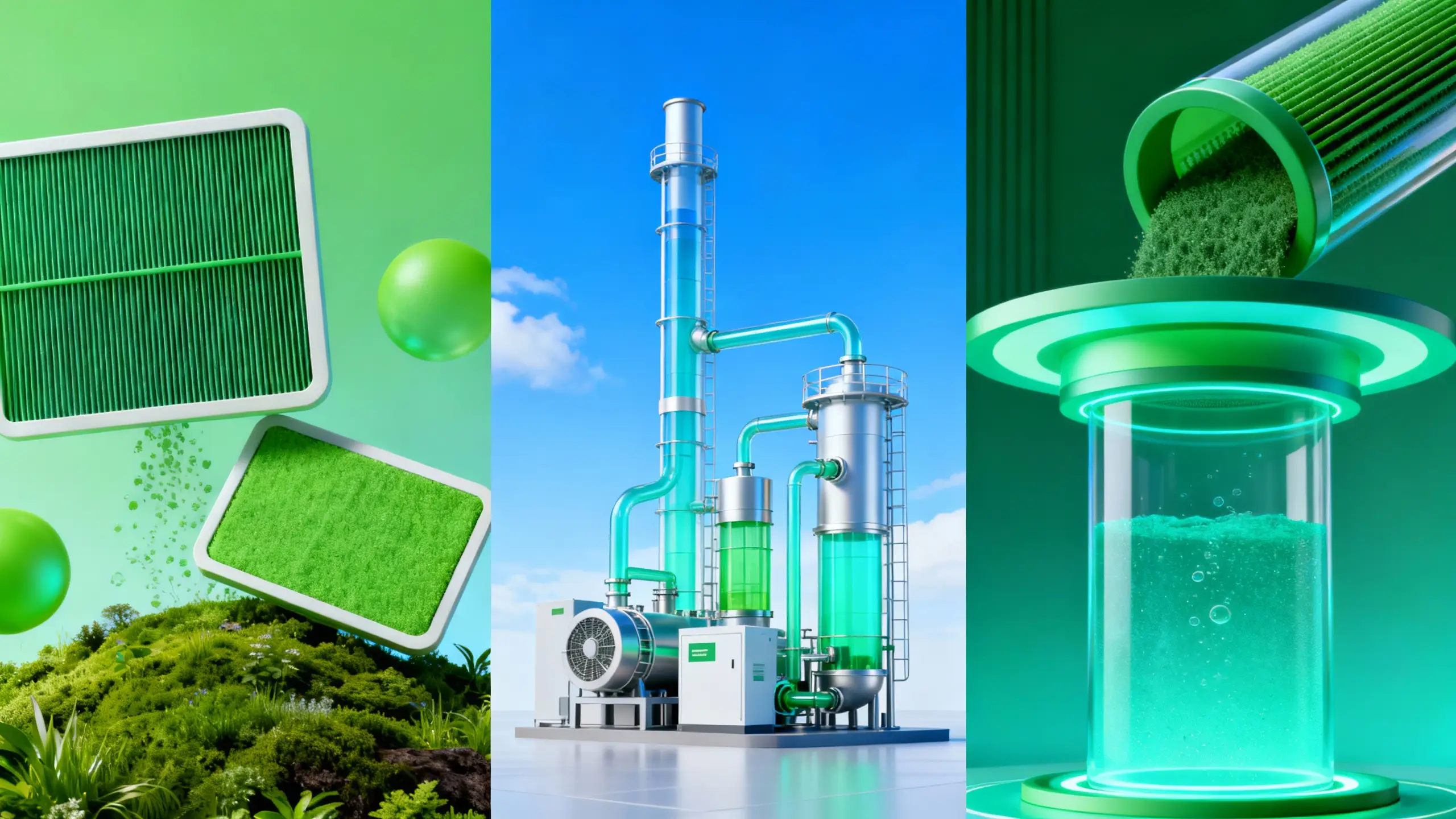
The technology operates through two main approaches: liquid sorbent systems that use chemical solutions to absorb CO2, and solid sorbent systems that use solid materials to adsorb CO2. Both approaches require energy for regeneration, where captured CO2 is released from the sorbent material for storage or use. The energy source for regeneration determines the technology's carbon footprint and cost, with renewable energy enabling net-negative emissions and fossil fuels potentially creating more emissions than captured.
DAC's importance stems from its role in achieving net-zero and negative emissions scenarios. Even with aggressive emission reductions, achieving climate goals will require removing CO2 that has already been emitted and continues to accumulate in the atmosphere. Natural solutions like reforestation and soil carbon sequestration have limitations in scale, permanence, and verification. DAC offers a technological solution that can scale to billions of tons annually, provide permanent storage, and enable precise measurement and verification of carbon removal.
Commercial Deployment: From Pilot to Megaton Scale
The direct air capture industry has progressed from small pilot projects to commercial-scale facilities in 2026, marking a critical transition toward operational viability. According to Climeworks' announcement, the company's Mammoth plant in Iceland, operational since May 2024, has a 36,000-ton-per-year capacity, nearly ten times larger than Climeworks' previous Orca plant. Climeworks aims for megaton capacity by 2030 and gigaton scale by 2050, with plans for multiple megaton hubs in the United States.
The Mammoth facility demonstrates scaling from previous generations, using modular design that enables incremental capacity increases. The plant uses renewable geothermal energy for operation, ensuring net-negative emissions where more CO2 is removed than emitted during operation. According to Reuters reporting, Climeworks is targeting costs of $400-600 per ton by 2030 and $200-350 per ton by 2040, reflecting confidence that continued scaling and technology improvements will drive costs down further.
According to Airhive's operational update, the company's 1,000-tonne-per-year system in Alberta achieved costs below $500 per tonne in 2026, representing the first major cost breakthrough from an operational commercial facility. The system is part of Deep Sky Alpha, a cross-technology DAC hub that began operations in August 2025, demonstrating collaboration across different DAC approaches to optimize performance and costs. Airhive's cost achievement demonstrates that DAC can reach price points that make carbon removal economically viable for corporate and government buyers.
GE Vernova's deployment at Deep Sky Alpha, beginning operations by late 2026 with capacity to capture 1,500 tons of CO2 annually, demonstrates the diversity of DAC approaches reaching commercial scale. The facility serves as a testing ground for multiple technologies, enabling comparison of performance, costs, and operational characteristics. This collaborative approach accelerates learning and optimization, helping the industry identify best practices and drive costs down faster than isolated deployments would enable.
Breakthrough Technologies: Passive Carbonate Crystallization
A major breakthrough in DAC technology involves passive direct air capture via evaporative carbonate crystallization, representing a fundamentally different approach that achieves superior performance and lower costs. According to research published in Nature, the technology uses ultraconcentrated potassium hydroxide (KOH) solutions exceeding 9 M concentration that achieve rapid CO2-to-carbonate crystallization at the air interface, with regeneration via an electrochemical step. This approach eliminates the need for energy-intensive heating that conventional liquid sorbent systems require.
The passive crystallization approach achieves over sixfold higher capture flux than conventional systems, meaning it can process more air and capture more CO2 per unit of equipment. A modular unit of 100 crystallizers demonstrated threefold higher flux than conventional contactors while maintaining stable operation over seven cycles and 25 days. This performance advantage translates directly to lower costs, as more CO2 can be captured with less equipment and energy input.
According to the research, the technology achieves capital cost reductions of approximately 42% and levelized cost reductions of approximately 32% compared with conventional liquid-based DAC systems. These cost reductions stem from the higher capture flux reducing equipment requirements, the passive nature reducing energy consumption, and the crystallization approach simplifying the capture process. The cost advantages make the technology particularly attractive for scaling to larger facilities where capital costs become a major factor.
The electrochemical regeneration step enables efficient recovery of the sorbent material and release of captured CO2. Unlike thermal regeneration that requires high temperatures and significant energy input, electrochemical regeneration can operate at lower temperatures with electricity from renewable sources. This approach aligns with the goal of using renewable energy for DAC operations, ensuring net-negative emissions and reducing operational costs as renewable energy prices continue to decline.
Electrochemical Conversion: Closing the Carbon Loop
Recent advances in electrochemical systems enable direct conversion of captured CO2 into valuable chemicals, creating integrated capture-conversion systems that eliminate energy-intensive CO2 recovery steps. According to research published in Nature Sustainability, a porous solid electrolyte reactor can directly convert bicarbonates captured through alkaline DAC into valuable chemicals including formate, achieving 96% formate Faradaic efficiency and 95% CO2 recovery efficiency with stable operation for over 100 hours at high current densities.
The electrochemical conversion approach creates a closed-loop system where captured CO2 is immediately converted into useful products, eliminating the need for separate CO2 recovery, compression, and transportation steps. This integration reduces energy consumption, capital costs, and operational complexity compared to systems that capture CO2 for storage or separate conversion. The ability to produce valuable chemicals also creates revenue streams that can offset capture costs, improving the economics of DAC systems.
According to the research, the system demonstrates economic viability for integrated capture-conversion systems, with the ability to produce formate and other chemicals at competitive costs. The formate can be used in various applications including fuel production, chemical manufacturing, and energy storage, creating markets for captured CO2 that improve the economics of carbon removal. The integration of capture and conversion in a single system represents progress toward circular carbon economies where CO2 becomes a resource rather than waste.
The electrochemical approach also enables flexible operation, with the ability to adjust production based on electricity availability and prices. When renewable electricity is abundant and cheap, the system can operate at high capacity, capturing and converting CO2. When electricity is expensive or unavailable, the system can reduce operation, optimizing economics based on energy markets. This flexibility makes the technology well-suited for integration with renewable energy systems and grid balancing.
Near-Cryogenic Capture: Leveraging LNG Infrastructure
An innovative approach to reducing DAC costs involves integration with liquified natural gas (LNG) regasification, leveraging existing infrastructure and cold energy to achieve dramatic cost reductions. According to research on near-cryogenic direct air capture, capture at near-cryogenic temperatures (160-220 K) integrated with LNG regasification reduces the levelized cost of capture to $68.2 per tonne CO2, representing a threefold reduction compared to conventional DAC systems. The approach requires only 1.7-3.3 gigajoules per tonne of CO2 compared to conventional DAC's 7+ GJ/tonne.
The near-cryogenic approach leverages the cold energy available during LNG regasification, where liquified natural gas is warmed to convert it to gas for distribution. This warming process releases significant cold energy that is typically wasted, but can be used to cool air for more efficient CO2 capture. The integration creates synergies where LNG infrastructure provides both the cold energy for capture and potential markets for captured CO2 in synthetic fuel production.
According to the research, the near-cryogenic temperatures enable more efficient CO2 adsorption, reducing the energy required for capture. The integration with LNG infrastructure also reduces capital costs by leveraging existing facilities and equipment. The combination of lower energy requirements and reduced capital costs creates the dramatic cost reductions that make the approach economically attractive.
The approach also creates opportunities for carbon-neutral or carbon-negative LNG, where CO2 captured during regasification offsets or exceeds emissions from natural gas combustion. This creates value propositions for LNG producers and consumers seeking to reduce carbon footprints. The integration of carbon capture with energy infrastructure represents a model for how DAC can be deployed to leverage existing assets and create economic synergies.
Cost Trajectory: Path to Economic Viability
The cost trajectory of direct air capture represents one of the most critical factors determining its role in climate action. Current costs have been prohibitively high for widespread deployment, but recent breakthroughs and scaling are driving costs down toward economic viability. According to Climeworks' cost targets, the company is targeting $400-600 per ton by 2030 and $200-350 per ton by 2040, reflecting confidence that continued innovation and scaling will achieve these reductions.
Airhive's achievement of costs below $500 per tonne in 2026 represents the first major cost breakthrough from an operational commercial facility, demonstrating that cost targets are achievable. The breakthrough comes from a combination of technology improvements, operational optimization, and scaling benefits. As more facilities deploy and learn from operations, costs are expected to continue declining through learning curves and technology improvements.
According to analysis from the International Energy Agency, continued innovation in CO2 utilization opportunities, including synthetic fuels, is expected to further drive down costs by creating revenue streams that offset capture expenses. The ability to produce valuable products from captured CO2 improves economics and creates markets that can support larger-scale deployment. As utilization technologies mature and markets develop, the net cost of carbon removal should decrease further.
The cost trajectory also depends on policy support, including carbon pricing, tax credits, and procurement programs that create demand for carbon removal. Government support can bridge the gap between current costs and economic viability, enabling deployment at scale that drives learning and cost reductions. As costs decline and policy support continues, DAC should reach price points that make it attractive for corporate and government buyers seeking to achieve net-zero goals.
Storage and Utilization: Creating Value from Captured Carbon
The fate of captured CO2 determines both the climate impact and economics of direct air capture systems. Permanent storage in geological formations provides the most direct climate benefit, removing CO2 from the atmosphere permanently. However, utilization that converts CO2 into valuable products can improve economics and create markets that support larger-scale deployment. The optimal approach depends on specific circumstances, with both storage and utilization playing important roles.
Geological storage involves injecting captured CO2 into deep underground formations where it can be stored permanently. According to analysis from the IEA, suitable storage sites include depleted oil and gas reservoirs, deep saline aquifers, and other geological formations with appropriate characteristics. Storage provides permanent carbon removal but requires infrastructure for transportation and injection, adding costs and complexity.
CO2 utilization creates products from captured carbon, including synthetic fuels, chemicals, building materials, and other products. According to research on electrochemical conversion, integrated capture-conversion systems can produce valuable chemicals including formate with high efficiency, creating revenue streams that offset capture costs. Synthetic fuels represent a particularly valuable utilization pathway, as they can replace fossil fuels while using captured CO2, creating carbon-neutral or carbon-negative fuel cycles.
Building materials represent another valuable utilization pathway, as CO2 can be incorporated into concrete, aggregates, and other construction materials, providing permanent storage while creating useful products. This approach combines carbon removal with infrastructure development, creating value from captured CO2 while addressing construction needs. As utilization technologies mature and markets develop, the economics of DAC should improve, enabling larger-scale deployment.
Challenges: Energy, Scale, and Economics
Despite significant progress, direct air capture faces challenges that must be addressed for widespread deployment. Energy requirements represent a fundamental challenge, as DAC systems require substantial energy for air processing, sorbent regeneration, and CO2 compression. According to analysis from WRI, energy requirements can be substantial, making renewable energy essential for net-negative emissions. The energy source determines both the carbon footprint and cost of DAC operations.
Scaling represents another challenge, as moving from current megaton-scale facilities to the gigaton scale needed for climate impact requires massive deployment. According to Climeworks' scaling plans, the company aims for gigaton scale by 2050, requiring deployment of thousands of facilities globally. This scaling requires manufacturing capacity, skilled workforce, supply chains, and infrastructure that must be developed in parallel with technology improvements.
Economics remain a challenge despite cost reductions, as DAC is still more expensive than many other climate solutions. Policy support including carbon pricing, tax credits, and procurement programs can bridge economic gaps, but long-term viability requires costs to decline further. The combination of technology improvements, scaling benefits, and utilization revenue should drive costs toward economic viability, but the pace of cost reduction will determine deployment scale and speed.
Public acceptance and regulatory frameworks also represent challenges, as large-scale DAC deployment will require public support and appropriate regulations. Storage sites must be identified, permitted, and monitored, requiring regulatory frameworks that ensure safety and permanence. Public acceptance depends on understanding of DAC's role in climate action and confidence in safety and effectiveness.
Future Directions: Toward Gigaton Scale
The future of direct air capture involves scaling from current megaton capacities to the gigaton scale needed for meaningful climate impact. According to Climeworks' vision, the company aims for gigaton scale by 2050, requiring deployment of thousands of facilities globally. This scaling will require continued technology improvements, cost reductions, policy support, and infrastructure development.
Technology improvements will continue to drive costs down and performance up. Research into new sorbent materials, more efficient processes, and better integration with renewable energy should yield further improvements. The diversity of approaches—liquid sorbents, solid sorbents, passive crystallization, electrochemical systems, near-cryogenic capture—creates multiple pathways for innovation, increasing the likelihood of breakthroughs that improve economics and performance.
Policy support will be essential for scaling, as carbon removal markets require demand signals that justify investment and deployment. Government procurement programs, carbon pricing, tax credits, and regulations can create markets that support scaling. International cooperation can coordinate deployment and share learning, accelerating progress toward gigaton scale.
Integration with other climate solutions will also be important, as DAC works best as part of comprehensive climate strategies that include emission reductions, natural carbon removal, and other technologies. The combination of approaches can achieve climate goals more effectively and efficiently than any single solution alone. As DAC scales and costs decline, it should become an increasingly important component of climate action portfolios.
Conclusion: The Carbon Removal Revolution
Direct air capture has reached critical milestones in 2026, with commercial facilities achieving costs below $500 per tonne and breakthrough technologies demonstrating potential for further reductions. The transition from experimental technology to commercial deployment marks a fundamental shift toward making carbon removal economically viable and operationally practical. As facilities scale to megaton capacities and costs continue declining, DAC is positioned to become an essential technology for achieving net-zero emissions and removing legacy atmospheric CO2.
The convergence of technology breakthroughs, commercial deployment, cost reductions, and policy support is creating unprecedented opportunities for carbon removal at scale. Passive crystallization, electrochemical conversion, near-cryogenic capture, and other innovations are demonstrating that DAC can achieve performance and costs that make it practical for widespread deployment. The coming years will see continued scaling, cost reductions, and integration with other climate solutions as DAC becomes an increasingly important tool for climate action.
The urgency of climate change and the scale of required carbon removal make DAC's development and deployment critical for achieving climate goals. While challenges remain in energy requirements, scaling, and economics, the progress demonstrated in 2026 shows that these challenges are surmountable with continued innovation, investment, and policy support. For a world facing the imperative of removing billions of tons of CO2 from the atmosphere, direct air capture offers a technological pathway that can scale to meet the challenge, providing a tool that complements emission reductions and natural solutions in comprehensive climate action strategies.