

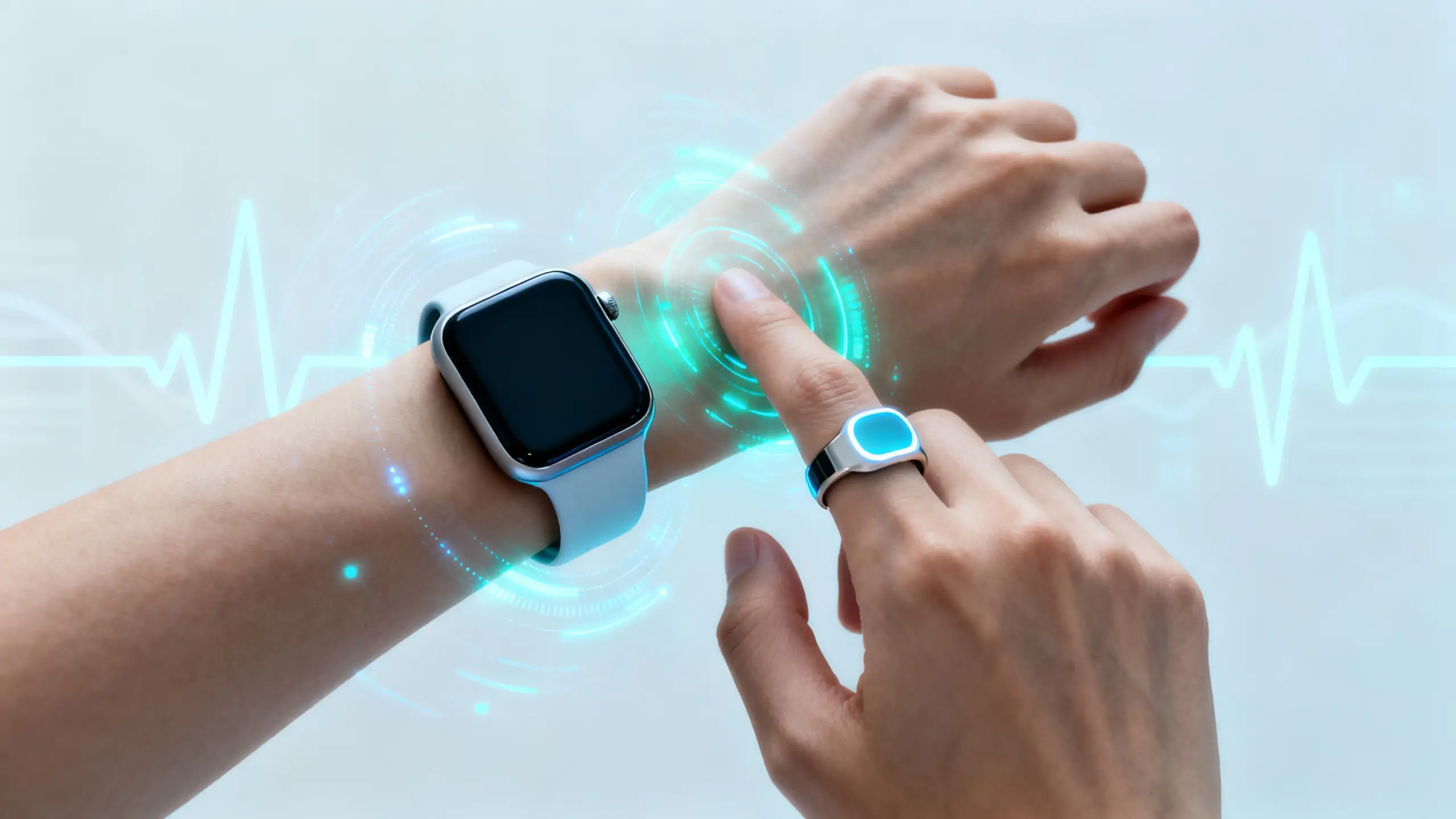
By 2026, wearable health technology has become a central part of how millions of people track, understand, and manage their health, moving far beyond simple step counts into continuous monitoring of heart rhythm, sleep, stress, and metabolic markers. According to Fortune Business Insights’ wearable medical devices market report, the global wearable medical devices market is projected to reach around $117 billion in 2026, up from roughly $103 billion in 2025, and could grow to more than $500 billion by 2034 at a compound annual growth rate of about 20%. A separate forecast from Global Market Insights estimates the market at approximately $138 billion in 2026, rising to nearly $544 billion by 2034 at a 16.5% CAGR, underscoring just how quickly wearables are shifting from consumer gadgets to core components of digital health infrastructure.
Within this broader category, continuous glucose monitoring (CGM) and continuous blood pressure monitoring stand out as some of the fastest-growing segments. Grand View Research’s CGM market analysis values the global CGM market at around $13.7 billion in 2024, with projections to reach nearly $50 billion by 2033 at a 15.4% CAGR. Meanwhile, Global Market Insights’ wearable blood pressure monitor report estimates that wearable blood pressure devices will grow from about $2.1 billion in 2024 to roughly $8.7 billion by 2034, also at a double-digit growth rate. Together with smartwatches, smart rings, and fitness bands, these devices form a multi-layered ecosystem where continuous, passive data collection is increasingly the norm rather than the exception.
From Step Counters to Multi-Sensor Health Platforms
The first wave of consumer wearables focused on steps, calories, and basic activity tracking, but by 2026 the flagship devices from Apple, Google (Fitbit), Samsung, and others operate more like multi-sensor health platforms. Modern smartwatches and rings routinely track heart rate, heart rate variability, blood oxygen saturation, sleep stages, skin temperature trends, and movement patterns, using combinations of photoplethysmography (PPG), accelerometers, gyroscopes, skin temperature sensors, and sometimes electrocardiogram (ECG) electrodes.
According to Mordor Intelligence’s wearable medical devices analysis, consumer-grade devices still account for a large share of unit volume, but clinical-grade and hybrid devices are the fastest-growing segment as healthcare providers integrate wearables into remote monitoring programs. The line between a consumer device and a regulated medical device is blurring, as companies seek FDA clearance or CE marking for specific features while maintaining broad consumer appeal, app ecosystems, and subscription-based health coaching services.
In this environment, the core value proposition is shifting from single metrics to integrated insights: readiness scores that synthesize sleep and recovery, alerts that flag patterns associated with chronic disease risk, and coaching that nudges users toward sustained behavioral change. That shift sets the stage for wearables to play a more direct role in preventive medicine, not just fitness.
Heart Health: AFib Detection Moves Mainstream
One of the most mature examples of wearables crossing into regulated medicine is atrial fibrillation (AFib) detection. Apple, Fitbit, and other manufacturers have spent years validating algorithms that use optical sensors and ECG features to detect irregular heart rhythms associated with AFib, a condition that increases stroke risk by up to fivefold and affects tens of millions of people worldwide.
Apple has received FDA 510(k) clearance for multiple AFib-related features. According to Apple’s clinical documentation on arrhythmia detection and Fierce Biotech’s coverage of Apple Watch AFib History, the Apple Watch includes a built-in ECG app that can generate single-lead ECG traces, an Irregular Rhythm Notification feature that uses PPG to flag possible AFib, and an AFib History feature that estimates how frequently a wearer shows signs of AFib over time. The AFib History feature, cleared in watchOS 9, is available to users 22 years or older with a prior AFib diagnosis and provides weekly summaries of AFib burden, along with insights into how factors like sleep, activity, and alcohol consumption may correlate with episodes. Users can export detailed reports to share with clinicians.
Fitbit, now part of Google, has pursued a different but complementary path. According to Google’s blog on Fitbit irregular heart rhythm notifications, Fitbit received FDA clearance for a PPG-based algorithm that passively monitors heart rhythm and sends irregular rhythm notifications that may indicate AFib. The feature operates in the background when users are still or asleep, analyzing subtle changes in blood volume at the wrist. The underlying Fitbit Heart Study, which enrolled 455,699 participants, found that when the PPG algorithm flagged an irregular rhythm and participants wore an ECG patch, the system correctly identified AFib episodes 98% of the time, a level of accuracy that helped secure regulatory clearance.
By 2026, millions of users carry devices that can alert them to possible AFib and help manage diagnosed AFib through burden tracking and lifestyle correlation. For healthcare systems, these capabilities offer the potential for earlier detection, reduced stroke risk, and data-rich follow-up—but they also raise questions about false positives, clinician workload, and who pays for ongoing monitoring and triage.
Metabolic Health and Continuous Glucose Monitoring
While continuous glucose monitoring has long been a staple of type 1 diabetes management, the 2020s have seen CGMs move into broader metabolic health and type 2 diabetes prevention. Companies such as Dexcom, Abbott, and newer startups provide sensors that measure interstitial glucose every few minutes and stream data to smartphones and wearables, creating real-time views of glucose responses to food, exercise, and sleep.
According to Grand View Research’s continuous glucose monitoring market report, the CGM market is projected to grow from about $13.7 billion in 2024 to nearly $50 billion by 2033, driven not only by rising diabetes prevalence but also by non-diabetic users interested in weight management, sports performance, and personalized nutrition. In 2026, app ecosystems around CGMs analyze glucose traces, flag prolonged spikes, and provide personalized recommendations on meal composition, timing, and exercise intervals to improve metabolic resilience.
Wearables increasingly act as hubs for this data, integrating glucose trends with activity and heart rate, and in some cases surface alerts directly on smartwatches. Some health systems and insurers are piloting programs that provide CGMs and companion apps to high-risk patients as part of intensive lifestyle interventions, hoping to reduce downstream costs from complications such as cardiovascular disease and kidney failure. At the same time, experts warn about over-medicalization, data overload, and the need for clear guidelines so that CGM use outside of diagnosed diabetes is evidence-based and equitable.
Sleep, Recovery, and the Oura Ring
Sleep tracking is another area where wearables have progressed from basic duration estimates to multi-stage, multi-sensor analysis. The Oura Ring has become one of the most studied devices in this space. A 2024 validation study published in Sleep Medicine and accessible via ScienceDirect compared the Oura Ring Generation 3 with its Sleep Staging Algorithm 2.0 to multi-night ambulatory polysomnography across 96 participants and more than 421,000 sleep epochs, concluding that the ring shows good agreement with gold-standard measures for global sleep metrics.
Other research, summarized in Sensors and open-access sleep studies, has focused on deriving accurate nocturnal heart rate, rMSSD, and frequency-domain heart rate variability (HRV) metrics from the Oura Ring. These signals feed into Oura’s Readiness Score, a composite metric that estimates how recovered a user is based on sleep quality, prior activity, HRV, and other factors, as described in Oura’s own documentation on the Readiness Score.
In 2026, mainstream smartwatches from Apple, Samsung, and Fitbit offer similar sleep staging, HRV, and readiness-style metrics, turning nightly data into actionable insights about when to push harder and when to rest. Clinicians are cautiously beginning to integrate longitudinal sleep and HRV trends into conversations about stress, burnout, and mental health, while researchers use these large datasets to study how sleep disruption relates to cardiometabolic disease, depression, and cognitive performance.
From Consumer Gadgets to Remote Patient Monitoring
As sensors and algorithms improve, wearables are moving from pure consumer devices into remote patient monitoring (RPM) programs run by hospitals and clinics. According to Fortune Business Insights, remote patient monitoring and home healthcare represent one of the fastest-growing application segments for wearable medical devices. Clinicians use wearables to track post-operative recovery, heart failure symptoms, COPD exacerbations, and hypertension, with data flowing into dashboards that highlight patients who may need follow-up.
Health systems are experimenting with virtual wards, where high-risk patients are monitored at home with combinations of smartwatches, connected blood pressure cuffs, and pulse oximeters instead of being kept in hospital beds. These models promise reduced readmissions, better patient experience, and potentially lower costs, but they demand interoperable data pipelines, clear reimbursement rules, and careful attention to alert fatigue so clinicians are not overwhelmed by false alarms.
AI, Data Governance, and Privacy
The power of wearable health tech lies in its data, but that data also creates privacy and governance challenges. AI models that run on-device or in the cloud can detect subtle patterns in multimodal time series—heart rate variability changes that precede illness, movement patterns that suggest early Parkinsonian symptoms, or combinations of sleep and resting heart rate that flag overtraining. However, these same datasets are deeply personal, raising concerns about surveillance, employer misuse, and insurance discrimination.
Privacy advocates and regulators emphasize the need for transparent consent, granular controls over which data is shared and with whom, and strong anonymization when data is used for research. In Europe, the GDPR sets a high bar for processing health-related data, while in the United States, wearables often fall into gaps between HIPAA-covered entities and consumer apps, leaving some data outside traditional health privacy protections. As wearables become more closely integrated with clinical workflows, policymakers are under pressure to update regulations so that protections keep pace with capabilities.
Equity, Access, and the Risk of a Wellness Divide
While wearable health tech offers powerful tools for early detection and behavior change, access is far from universal. High-end smartwatches, rings, and CGMs are often expensive, and may require subscriptions for advanced features, creating a wellness divide where affluent, tech-savvy users reap most benefits. Communities facing the highest burdens of chronic disease—often lower-income populations and racial and ethnic minorities—may have less access to these tools, exacerbating existing health inequities.
Some public health initiatives and insurers are trying to close this gap by subsidizing devices, offering wearables as part of chronic disease management or employee wellness programs, or integrating low-cost wearables into community health worker toolkits. But inclusive design, language support, and cultural relevance are just as important as hardware subsidies. Without deliberate efforts to expand access and tailor interventions, wearable health tech risks reinforcing disparities rather than reducing them.
The Next Wave: Non-Invasive Sensors and Context-Aware Coaching
Looking ahead, researchers and companies are pursuing non-invasive measures of metrics traditionally accessible only via blood tests or invasive sensors, including continuous blood pressure, blood oxygen trends, and experimental markers such as blood alcohol or ketone levels. Wearable blood pressure monitors are moving beyond cuff-based designs to cuffless, optical, or tonometric approaches, as tracked by Global Market Insights, while some experimental devices explore sweat sensors and microneedle patches for biochemical monitoring.
At the same time, AI models are making coaching more context-aware, combining signals from multiple devices with calendar data, location, and historical behavior to make recommendations that feel timely and personalized rather than generic. The vision for 2030 and beyond is an ecosystem where background monitoring and gentle nudges help people make healthier choices day by day, and where clinicians can access a rich longitudinal view of their patients’ physiology between visits.
Conclusion: Toward a Continuously Measured Health Future
In 2026, wearable health technology sits at the intersection of consumer electronics, clinical care, and public health policy. Smartwatches, rings, and medical-grade wearables now provide continuous streams of heart, sleep, metabolic, and activity data for hundreds of millions of users, with markets for wearable medical devices, CGMs, and blood pressure monitors all growing at double-digit compound rates. Features such as Apple Watch’s FDA-cleared AFib detection and AFib History, Fitbit’s irregular heart rhythm notifications, and validated Oura Ring sleep and HRV metrics illustrate how wearables are moving from wellness into regulated healthcare.
Whether this shift delivers on its promise of better prevention, earlier detection, and more personalized care will depend on how well health systems, regulators, and technology companies handle issues of data quality, integration, privacy, and equity. If they succeed, wearables could become a foundational layer of a continuously measured health future—one where subtle physiological changes trigger timely interventions long before disease becomes acute, and where the boundary between daily life and healthcare is increasingly blurred in service of better outcomes rather than constant surveillance.