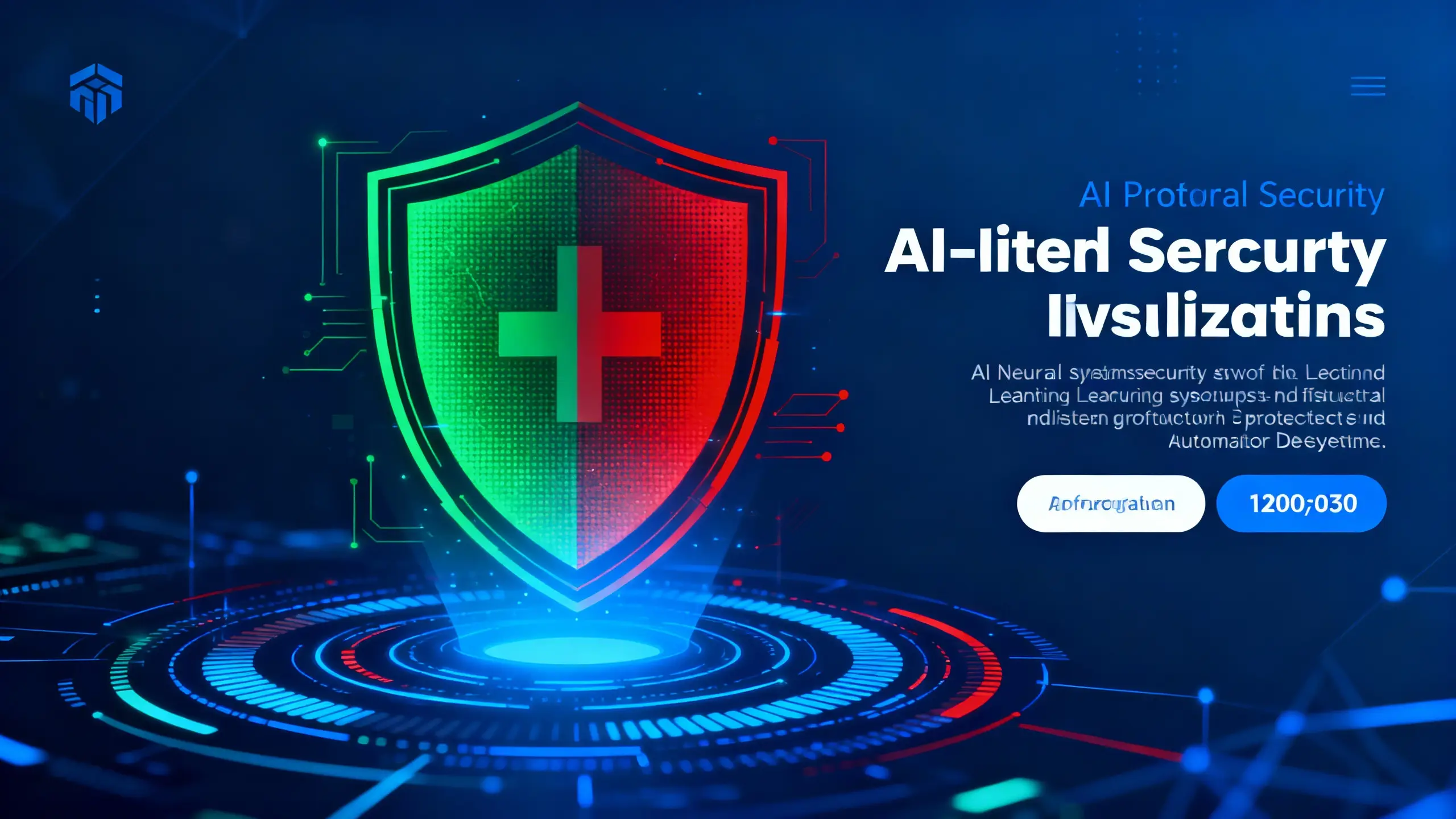


A cybersecurity crisis is unfolding in 2026, and most organizations are losing the battle. According to CrowdStrike's State of Ransomware Survey, 76% of global organizations struggle to match the speed and sophistication of AI-powered attacks—while only 7% have deployed AI-enabled defense tools to counter these threats. This staggering defense gap represents one of the most critical security challenges businesses have ever faced.
The numbers paint a dire picture. 85% of IT and cybersecurity professionals report their organizations experienced deepfake-related incidents in the past year, with 55% suffering financial losses averaging over $280,000. Meanwhile, ransomware damage is projected to reach $115 billion globally in 2025, up from $91 billion in 2024, as AI-powered attacks become the norm rather than the exception.
"We're witnessing the industrialization of cybercrime," said one security researcher. "AI has transformed attacks from requiring deep technical expertise to simply knowing how to use AI-powered tools. The barrier to entry for sophisticated attacks has collapsed."
The implications are profound. As attackers weaponize AI to accelerate every stage of attacks—from initial intrusion to data exfiltration to ransom demands—defenders are struggling to keep pace. Nearly 50% of organizations fear they cannot detect or respond as fast as AI-driven attacks execute, and fewer than a quarter recover from attacks within 24 hours. The era of reactive cybersecurity is ending, and most organizations aren't prepared for what comes next.
The Defense Gap: 76% Struggle, Only 7% Protected
The most alarming statistic from recent cybersecurity research is the massive gap between threat sophistication and defensive capability. According to CrowdStrike's survey, 76% of organizations globally struggle to match the speed and sophistication of AI-powered attacks, creating a fundamental imbalance that favors attackers.
The Offense-Defense Imbalance
The gap extends far beyond speed. BCG research reveals that while approximately 60% of companies believe they experienced an AI-powered cyberattack in the past year, only 7% have deployed AI-enabled defense tools to counter these threats. This represents a 8.5:1 ratio of attack exposure to defense deployment—a dangerous imbalance that leaves organizations vulnerable.
The problem is compounded by budget and talent constraints. Only 5% of companies have meaningfully increased cybersecurity budgets in response to AI threats, while 69% report difficulty hiring AI-cybersecurity talent. Despite 89% viewing AI-powered protection as essential, most haven't implemented it, and 87% say AI makes phishing lures more convincing, but defenses haven't adapted.
This defense gap creates a window of vulnerability that attackers are exploiting. As AI-powered attacks become faster, more sophisticated, and easier to execute, organizations without AI defenses are increasingly outmatched.
Why Defenses Are Lagging
Several factors contribute to the defense gap:
Budget Constraints: Despite recognizing the threat, most organizations haven't increased cybersecurity budgets to address AI attacks. This reflects broader economic pressures and competing priorities, but it leaves security teams underfunded for the challenge they face.
Talent Shortage: The demand for AI-cybersecurity expertise far exceeds supply. 69% of organizations struggle to hire AI-cybersecurity talent, creating a skills gap that prevents effective defense deployment even when budgets are available.
Technology Maturity: AI defense tools are still evolving, and many organizations are waiting for more mature solutions before investing. However, this delay creates vulnerability as attackers continue advancing their capabilities.
Organizational Inertia: Implementing AI defenses requires organizational change, new processes, and cultural shifts. Many organizations struggle with the change management required to effectively deploy new security technologies.
Misperception of Risk: Some organizations may underestimate their exposure to AI-powered attacks, believing they're not high-value targets or that existing defenses are sufficient. This misperception delays necessary investments.
Deepfake Attacks: The $280,000 Average Loss
Deepfake attacks have emerged as one of the most damaging and rapidly growing cybersecurity threats. According to IRONSCALES research, 85% of IT and cybersecurity professionals reported their organizations experienced one or more deepfake-related incidents in the past 12 months.
The Scale of Deepfake Damage
The financial impact is severe. Fifty-five percent of organizations reported suffering financial losses from deepfake attacks, with average losses exceeding $280,000 per affected organization. Among organizations that lost money, 61% reported losses exceeding $100,000, nearly 19% lost $500,000 or more, and over 5% lost $1 million or more to deepfake-related incidents.
These losses represent a significant business impact, affecting profitability, operations, and organizational stability. For many small and medium-sized businesses, losses of this magnitude can be catastrophic.
Attack Methods and Vectors
Deepfake attacks use multiple vectors:
Audio deepfakes, particularly voice cloning, have affected 44% of businesses, with 6% experiencing business interruption, financial loss, or IP theft. Attackers clone executive voices to authorize fraudulent transactions, as demonstrated by a UK energy company that lost nearly £200,000 after an employee received a call from someone who cloned the CEO's voice using AI. Video deepfakes have affected 36% of businesses, with 5% experiencing significant damage. Attackers create realistic video of executives or employees, using these for social engineering and fraud schemes. The frequency is increasing, with deepfake-related incidents rising 10% year-over-year, over 40% of affected organizations facing three or more attacks, and the trend accelerating as AI tools become more accessible.
The Human Trust Exploitation
Deepfake attacks are particularly effective because they exploit human trust rather than technical vulnerabilities. Unlike traditional cyberattacks that target software flaws, deepfakes target the human element of security—the tendency to trust voices, faces, and authority figures.
This makes deepfakes harder to detect through technical means, more convincing than traditional phishing, effective against trained employees who recognize standard attack patterns, and scalable as AI tools make creation easier.
The human element creates a fundamental challenge: even well-trained employees may struggle to identify sophisticated deepfakes, particularly when they appear to come from trusted sources like executives or colleagues.
Ransomware Evolution: AI-Powered and Industrialized
Ransomware has entered a new era, with AI powering attacks that are faster, more sophisticated, and more damaging than ever before. The ransomware landscape in 2026 reflects the industrialization of cybercrime, where AI tools enable attackers to scale operations and reduce the technical expertise required.
The Financial Scale
Ransomware damage has reached unprecedented levels, with $115 billion projected globally in 2025, up from $91 billion in 2024. The $57 billion in damages in 2021 shows rapid growth, with 11,000 projected daily attacks by 2025 compared to 4,400 in 2024. The average ransom payment reached $3.2 million in 2025, up from $2.73 million in 2024.
These numbers reflect both the increasing frequency of attacks and the growing sophistication that enables attackers to demand and receive higher ransoms.
AI-Powered Attack Chains
Ransomware groups are weaponizing AI across the entire attack lifecycle:
During reconnaissance, AI-powered scanning identifies vulnerable systems, automated target selection prioritizes high-value victims, and intelligence gathering uses AI to analyze organizational structures. For initial access, AI-generated phishing emails are more convincing than human-written attacks, social engineering is enhanced by AI analysis of target behavior, and vulnerability exploitation is automated through AI tools.
During lateral movement, automated network mapping identifies critical systems, AI-driven privilege escalation finds paths to administrative access, and stealth techniques use AI to evade detection. For data exfiltration, intelligent data identification finds the most valuable information, automated exfiltration minimizes detection risk, and AI-powered encryption targets critical systems. Extortion involves personalized ransom demands based on AI analysis of victim capabilities, multi-vector extortion combining encryption, data theft, and DDoS, and automated negotiation using AI chatbots.
Ransomware-as-a-Service (RaaS) Evolution
The RaaS model has evolved significantly:
Lower barriers to entry mean AI tools reduce technical requirements for launching attacks, less-skilled attackers can now execute sophisticated campaigns, and democratization of cybercrime occurs through accessible AI tools.
Industrialized operations feature automated attack chains reducing manual effort, scalable operations enabling attacks on multiple targets simultaneously, and professional services including customer support for ransom payments. The fragmented ecosystem sees major RaaS groups disrupted by law enforcement, fragmenting the market, new groups emerging with AI-enhanced capabilities, and innovation accelerating as groups compete for market share.
SMBs as Primary Targets
Small and medium-sized businesses (SMBs) face particular vulnerability:
SMBs face softer defenses with limited security budgets compared to large enterprises, fewer security personnel to detect and respond to attacks, and less sophisticated defenses making them easier targets. They represent high-value targets with critical business data that attackers can hold hostage, customer information valuable for extortion, and financial resources to pay ransoms. Attack frequency is increasing, with SMBs experiencing increased targeting as attackers seek easier victims, rapid attack execution leaving little time for response, and devastating impact from attacks that larger organizations might weather.
The Speed Problem: Attacks Outpacing Response
One of the most critical challenges in AI-powered cybersecurity is the speed gap between attacks and defenses. According to CrowdStrike's research, nearly 50% of organizations fear they cannot detect or respond as fast as AI-driven attacks execute.
Attack Speed Acceleration
AI-powered attacks operate at machine speed:
Automated execution means entire attack chains can execute in minutes or hours, with no human delays in decision-making or execution, 24/7 operation without fatigue or breaks, and parallel operations attacking multiple targets simultaneously. Rapid adaptation enables AI systems to learn from each attack, improving effectiveness, dynamic evasion adapting to defensive measures in real-time, continuous optimization of attack techniques, and rapid iteration testing new approaches. Scale advantages include massive attack volumes enabled by automation, targeting precision through AI analysis, resource efficiency allowing more attacks with fewer resources, and geographic distribution attacking globally without physical presence.
Response Time Challenges
Organizations struggle to match attack speed:
Detection delays occur because traditional security tools may take hours or days to detect AI-powered attacks, alert fatigue from high volumes of false positives, complexity of AI attacks making them harder to identify, and evolving attack patterns that don't match known signatures. Response limitations mean fewer than 25% of organizations recover from attacks within 24 hours, manual response processes are too slow for AI-speed attacks, coordination challenges exist across security teams, and resource constraints limit response capabilities. Recovery challenges include nearly 25% suffering significant disruption or data loss, business operations interrupted for extended periods, customer impact from service disruptions, and reputational damage from publicized attacks.
The 24-Hour Window
The speed gap creates a critical vulnerability window. If organizations can't detect and respond to attacks within 24 hours, attackers have time to complete data exfiltration before detection, encrypt critical systems making recovery difficult, establish persistent access for future attacks, and maximize damage before defensive measures activate.
This window represents the difference between contained incidents and catastrophic breaches, making speed of response a critical success factor.
Business Impact: Beyond Financial Losses
The impact of AI-powered cyberattacks extends far beyond direct financial losses, affecting operations, reputation, customer trust, and long-term business viability.
Operational Disruption
Service interruptions include ransomware encryption shutting down critical systems, DDoS attacks overwhelming infrastructure, data breaches requiring system isolation, and extended downtime during investigation and recovery. Productivity losses occur as employees are unable to work during system outages, manual workarounds reduce efficiency, recovery efforts divert resources from normal operations, and long-term productivity impacts result from disrupted workflows. Supply chain effects include vendor disruptions from attacks on partners, customer service impacts affecting relationships, delivery delays from operational interruptions, and contractual penalties from service level failures.
Reputational Damage
Customer trust is damaged through data breaches eroding customer confidence, service disruptions affecting customer satisfaction, public disclosure of security incidents, and long-term brand impact from security failures. Market position suffers from competitive disadvantages due to security concerns, investor confidence affected by security incidents, partnership impacts as companies assess security risks, and regulatory scrutiny from security failures. Recovery challenges include rebuilding trust taking time and resources, public relations efforts to manage reputation, customer retention challenges after incidents, and market share losses to competitors.
Regulatory and Legal Consequences
Compliance violations include data protection regulations (GDPR, CCPA, etc.) requiring breach notifications, industry-specific regulations with security requirements, regulatory fines for security failures, and compliance audits triggered by incidents. Legal liability encompasses class action lawsuits from data breach victims, contractual breaches with customers or partners, shareholder litigation from security failures, and insurance claims and coverage disputes. Regulatory actions involve government investigations into security practices, enforcement actions for regulatory violations, mandatory security improvements ordered by regulators, and ongoing oversight from regulatory bodies.
The Defense Challenge: Why Organizations Are Falling Behind
Understanding why organizations struggle to defend against AI-powered attacks is critical to developing effective solutions. The defense gap reflects multiple interconnected challenges.
Budget and Resource Constraints
Insufficient investment shows only 5% of companies significantly increased cybersecurity budgets for AI threats, competing priorities for limited resources, ROI uncertainty making security investments harder to justify, and economic pressures reducing available budgets. Resource allocation challenges include security teams already stretched thin, multiple threat vectors competing for attention, legacy system maintenance consuming resources, and compliance requirements diverting resources from security.
Talent and Skills Gaps
Hiring challenges show 69% of organizations struggle to hire AI-cybersecurity talent, high demand and low supply for specialized skills, competitive market for security professionals, and training requirements for existing staff. Skills development faces a rapidly evolving threat landscape requiring continuous learning, AI expertise needed across security teams, cross-functional knowledge required (AI + security), and time constraints limiting training opportunities.
Technology Maturity
Evolving solutions show AI defense tools still in early stages of development, integration challenges with existing security infrastructure, effectiveness uncertainty making investment decisions difficult, and vendor ecosystem still developing. Implementation complexity means deploying AI defenses requires significant technical expertise, integration with existing systems creates complexity, false positive management requires tuning and optimization, and ongoing maintenance and updates are needed.
Organizational Challenges
Change management requires cultural shifts to adopt AI defenses, process changes needed for new security approaches, resistance to change from security teams, and training and adoption challenges. Coordination complexity involves multiple stakeholders in security decisions, cross-functional coordination required, decision-making processes that may be too slow, and organizational silos hindering effective response.
The Deepfake Threat: Exploiting Human Trust
Deepfake attacks represent a fundamental shift in cybersecurity, targeting human psychology rather than technical vulnerabilities. This makes them particularly dangerous and difficult to defend against.
The Psychology of Deepfakes
Trust exploitation works because humans are hardwired to trust voices and faces, authority bias makes executive impersonations effective, urgency manipulation pressures quick decisions, and social proof uses familiar voices and contexts.
Detection challenges include sophisticated deepfakes that are nearly indistinguishable from real content, contextual plausibility making attacks seem legitimate, emotional manipulation overriding rational analysis, and time pressure preventing careful verification.
Real-World Impact
Financial fraud includes a $25 million fraud at a multinational engineering firm from deepfake CFO video, a £200,000 loss at a UK energy company from cloned CEO voice, average losses of $280,000 per affected organization, and 61% of affected organizations losing over $100,000. Business disruption affects 6% of businesses experiencing business interruption from deepfake audio calls, operational impacts from fraudulent authorizations, supply chain disruptions from vendor impersonation, and customer service issues from impersonated support calls. Intellectual property theft involves deepfakes used to gain unauthorized access to systems, social engineering targeting employees with access to sensitive data, business intelligence theft through impersonation, and competitive advantage loss from information theft.
The Training Gap
Despite awareness of the threat, training isn't sufficient:
Current training shows 88% of organizations conduct staff training on deepfakes, but training effectiveness is limited by attack sophistication, human psychology making detection difficult even with training, and evolving attack techniques requiring continuous training updates. Training limitations are evident as over half of trained organizations still lost money to deepfakes, a gap between awareness and prevention suggesting training isn't enough, technical solutions needed to complement human training, and detection tools required to identify sophisticated deepfakes.
Ransomware-as-a-Service: The Industrialization of Cybercrime
The RaaS model has transformed ransomware from individual criminal activity into an industrialized business, with AI accelerating this transformation.
The RaaS Business Model
Service offerings include ransomware platforms available to less-skilled attackers, customer support for ransom negotiations, payment processing handling cryptocurrency transactions, and marketing and sales promoting RaaS services. Revenue sharing operates through affiliate models where RaaS operators take a percentage of ransoms, subscription services providing ongoing access to ransomware tools, one-time licenses for specific attack campaigns, and custom development for targeted attacks. Lower barriers mean no technical expertise is required to launch sophisticated attacks, AI tools make attack execution easier, pre-built infrastructure reduces setup requirements, and support services help less-skilled attackers succeed.
AI Enhancement of RaaS
AI is transforming RaaS operations:
Automated attack chains feature end-to-end automation from initial access to ransom demand, reduced manual effort enabling scale, faster execution completing attacks in hours instead of days, and consistent quality reducing human error. Target selection uses AI analysis identifying high-value, vulnerable targets, risk assessment evaluating target security postures, profitability analysis prioritizing targets likely to pay, and automated reconnaissance gathering target intelligence. Attack optimization involves learning from successful attacks improving techniques, adapting to defenses evading security measures, personalizing approaches based on target characteristics, and maximizing success rates through continuous improvement.
The Fragmented Ecosystem
Law enforcement disruptions have fragmented the RaaS market:
Major group disruptions include several major RaaS groups taken down by law enforcement, market fragmentation creating new competitive dynamics, rapid reorganization as new groups emerge, and innovation acceleration as groups compete.
New entrants benefit from lower barriers enabling new groups to enter, AI tools reducing technical requirements, market opportunities from disrupted groups, and innovation focus on AI-enhanced capabilities.
Defense Strategies: Closing the Gap
While the defense gap is significant, organizations can take steps to improve their security posture against AI-powered attacks.
AI-Powered Defense Tools
Deployment priorities show only 7% of organizations have deployed AI defense tools—this must increase, with AI-powered threat detection identifying attacks faster, automated response matching attack speed, and behavioral analysis detecting anomalies indicating attacks. Key capabilities include real-time threat detection using AI to identify attacks as they occur, automated response containing threats before they spread, predictive analytics identifying vulnerabilities before exploitation, and continuous learning improving detection over time.
Deepfake Defense
Technical solutions include deepfake detection tools identifying synthetic media, voice authentication verifying caller identities, video verification confirming visual authenticity, and multi-factor authentication preventing unauthorized access. Process improvements involve verification protocols requiring confirmation of unusual requests, separation of duties preventing single points of failure, transaction limits reducing potential damage from fraud, and incident response plans for deepfake attacks. Training enhancement includes awareness programs teaching employees to recognize deepfakes, verification procedures for sensitive requests, red flags indicating potential deepfake attacks, and response protocols when deepfakes are suspected.
Ransomware Defense
Prevention strategies include backup and recovery systems enabling rapid restoration, network segmentation limiting lateral movement, access controls reducing attack surface, and patch management closing known vulnerabilities. Detection and response involve AI-powered monitoring identifying ransomware activity, rapid containment isolating affected systems, incident response plans for ransomware attacks, and recovery procedures minimizing downtime.
Business continuity requires disaster recovery plans ensuring operations continue, alternative systems maintaining critical functions, communication plans managing stakeholder expectations, and legal and regulatory preparation for incident response.
Budget and Resource Allocation
Investment priorities include increasing cybersecurity budgets to address AI threats, prioritizing AI defense tools as essential infrastructure, investing in talent through hiring and training, and allocating resources based on risk assessment. ROI considerations show the cost of attacks far exceeds defense investment, average losses of $280,000 from deepfakes alone, ransomware damages reaching $115 billion globally, and business disruption costs beyond direct financial losses.
The Future: An Arms Race at Machine Speed
The cybersecurity landscape in 2026 represents an arms race where AI accelerates both offense and defense, but offense currently has the advantage. The question is whether defenses can catch up.
Attack Evolution
Increasing sophistication shows AI tools becoming more powerful and accessible, attack techniques evolving faster than defenses, automation enabling attacks at unprecedented scale, and innovation from attacker communities outpacing defense development. New threat vectors include AI-generated malware evading traditional detection, social engineering enhanced by AI analysis, supply chain attacks targeting vendor relationships, and multi-vector campaigns combining multiple attack types.
Defense Evolution
Technology development shows AI defense tools maturing and becoming more effective, integration with existing security infrastructure improving, automation enabling faster response times, and intelligence sharing improving collective defense. Organizational adaptation includes security teams developing AI expertise, process improvements enabling faster response, cultural shifts prioritizing security, and investment increases as threat awareness grows.
The Critical Question
The fundamental question is whether defenses can catch up to attacks. Current trends suggest:
Challenges include attack sophistication advancing rapidly, defense deployment lagging significantly, resource constraints limiting defense capabilities, and talent shortages hindering defense development. Opportunities include technology maturity improving defense effectiveness, awareness increasing driving investment, best practices emerging from early adopters, and collaboration strengthening collective defense.
Conclusion: The Urgency of AI-Powered Defense
The cybersecurity crisis of 2026 is clear: 76% of organizations struggle against AI-powered attacks, while only 7% have deployed AI defense tools. This defense gap leaves most organizations vulnerable to attacks that are faster, more sophisticated, and more damaging than ever before.
The financial impact is staggering. Deepfake attacks affected 85% of businesses with average losses exceeding $280,000. Ransomware damage reached $115 billion globally in 2025, with attacks becoming more frequent and more effective. The human cost extends beyond financial losses to operational disruption, reputational damage, and long-term business viability.
The defense gap reflects multiple challenges: insufficient budgets, talent shortages, technology maturity issues, and organizational inertia. However, these challenges must be addressed urgently, as the cost of inaction far exceeds the cost of defense.
For organizations, the message is clear: the era of reactive cybersecurity is ending. AI-powered attacks operate at machine speed, requiring AI-powered defenses to match. Organizations that fail to adapt will find themselves increasingly vulnerable, while those that invest in AI defense capabilities will be better positioned to protect their assets, operations, and reputation.
The question isn't whether AI will transform cybersecurity—it already has. The question is whether organizations will adapt quickly enough to defend against threats that are evolving faster than ever before. With 76% of organizations already struggling and only 7% properly defended, the window for action is closing rapidly.
As 2026 unfolds, the organizations that invest in AI-powered defense capabilities, develop the necessary expertise, and adapt their security strategies will be the ones that survive and thrive in an era where cyberattacks are powered by artificial intelligence. For everyone else, the risks are growing—and the costs of being unprepared are becoming catastrophic.