
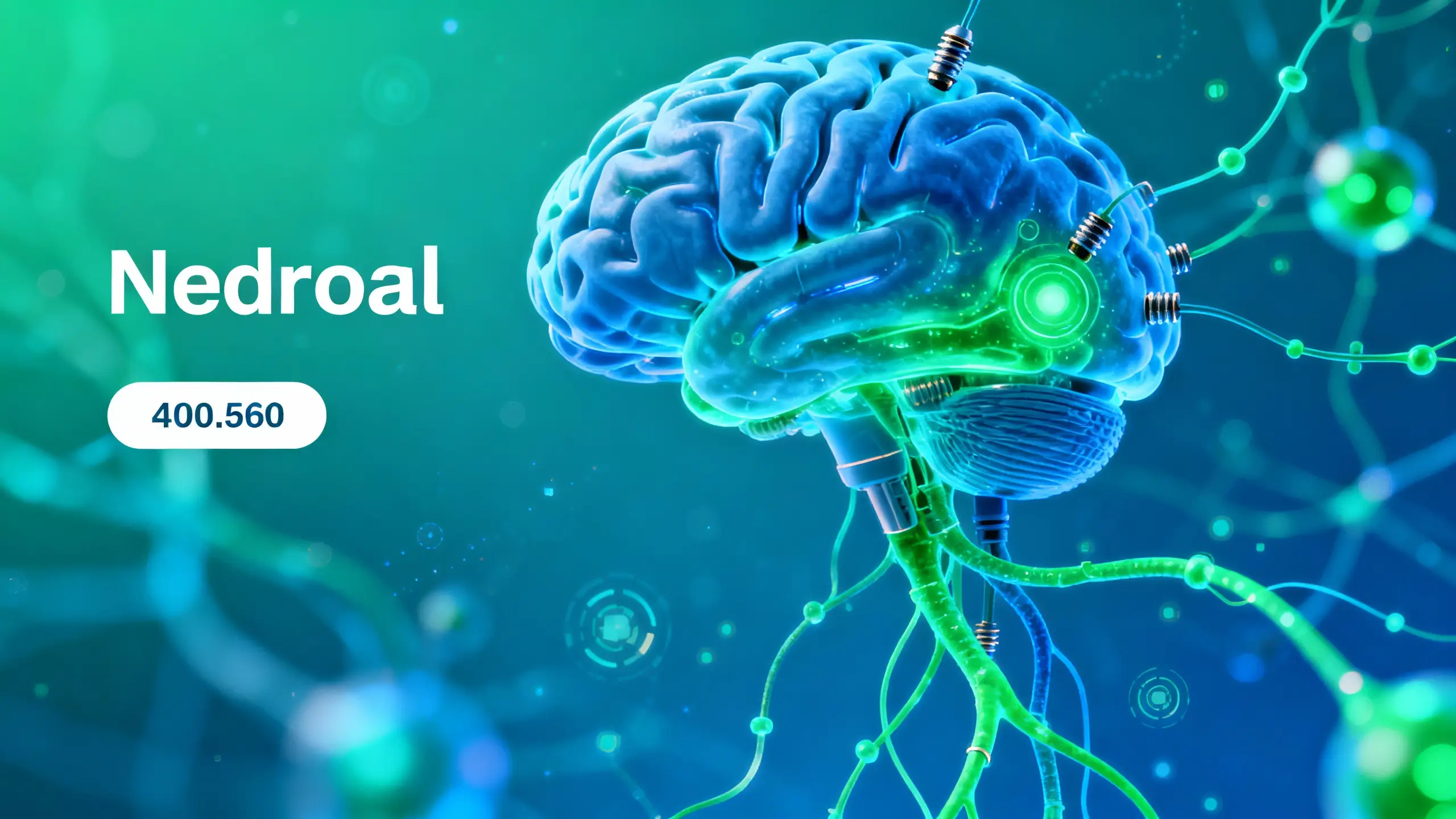
In January 2026, researchers published breakthrough research in Nature demonstrating that soft organic electrochemical neurons can operate at biologically relevant speeds while responding to brain signals in real time. Unlike rigid silicon implants that cause tissue inflammation and consume high power, these organic neurons communicate through ionic signals—the brain's native language—matching biological energy efficiency and enabling soft, implantable systems for closed-loop neuromodulation and brain-computer interfaces.
The breakthrough represents a fundamental shift from experimental prototypes toward practical neural interfaces. According to Nature's publication, the soft organic electrochemical neurons fire at speeds comparable to biological neurons while operating with event-driven efficiency that conserves energy like the brain itself. This capability, combined with single-transistor designs that dramatically improve scalability, positions organic electrochemical neurons as a viable alternative to silicon-based neural implants.
The technology addresses critical limitations that have prevented widespread adoption of brain-computer interfaces. Traditional silicon implants are rigid, generate heat, consume significant power, and often trigger unwanted tissue responses including inflammation and scarring. Organic electrochemical neurons offer superior biocompatibility through flexible materials, low power consumption through event-driven operation, and native compatibility with the brain's biological communication mechanisms through ionic signaling.
According to Nature Communications research, researchers have developed single-transistor organic electrochemical neurons (1T-OECNs) that leverage hysteretic switching of organic electrochemical memtransistors, enabling action potential generation, dynamic spiking, and logic operations with improved integration density. This simplified architecture makes practical implementation more feasible, addressing scalability challenges that have limited previous approaches.
The implications extend far beyond research. These organic neurons could enable brain-computer interfaces that restore movement to paralyzed patients, treat neurological disorders through closed-loop neuromodulation, and enable direct brain-computer communication. The technology's biocompatibility and energy efficiency make long-term implantation feasible, addressing a critical barrier to practical brain-computer interfaces.
The Silicon Problem: Why Traditional Neural Implants Fail
Traditional silicon-based neural implants face fundamental limitations that have prevented widespread adoption. According to Nature's analysis, silicon implants are rigid, generate heat, consume high power (operating at milliwatt scales), and often trigger unwanted tissue responses including inflammation and scarring.
The rigidity problem is particularly significant. The brain is soft and flexible, and rigid silicon implants create a mechanical mismatch that can damage tissue and provoke immune responses. This mismatch leads to inflammation, scarring, and encapsulation of the implant, which can degrade performance over time and create barriers to neural communication.
Power consumption is another critical limitation. Silicon implants require significant power to operate, generating heat that can damage surrounding tissue. The high power requirements also limit battery life and make wireless operation challenging. For long-term implants, this power consumption creates practical barriers to deployment.
Tissue inflammation and scarring represent perhaps the most significant problem. When the body recognizes a foreign object, it mounts an immune response that can encapsulate the implant in scar tissue. This encapsulation creates a barrier between the implant and neural tissue, degrading signal quality and potentially making the implant ineffective over time.
These limitations have constrained brain-computer interfaces to experimental applications and short-term use cases. For practical, long-term neural interfaces that could restore function to paralyzed patients or treat neurological disorders, a fundamentally different approach is needed.
The Organic Solution: Ionic Signals and Biological Compatibility
Organic electrochemical neurons address these limitations through a fundamentally different approach. Rather than using rigid silicon and electrical signals, organic neurons use flexible materials and ionic signals—the brain's native language. This compatibility enables communication that matches how the brain naturally works, reducing the mechanical and biological mismatch that causes problems with silicon implants.
According to Nature's research, organic electrochemical neurons communicate through ionic signals, matching the brain's natural communication mechanisms. This ionic signaling enables more natural interaction with neural tissue, reducing the likelihood of immune responses and tissue damage. The flexible materials also reduce mechanical mismatch, allowing the implants to conform to brain tissue rather than forcing tissue to conform to rigid implants.
The energy efficiency is equally important. Organic electrochemical neurons operate with event-driven efficiency similar to biological neurons—remaining silent most of the time and only consuming energy when responding to stimuli. According to Nature's analysis, this event-driven operation enables high-frequency, low-energy sensing suitable for closed-loop neurostimulation, matching the brain's own efficiency.
The biocompatibility advantages are significant. Flexible organic materials reduce unwanted tissue responses, and the ionic signaling approach is more compatible with biological systems than electrical signals from rigid silicon. This compatibility enables long-term implantation without the degradation that affects silicon implants.
However, organic neurons also face challenges. The materials must be stable in the biological environment, and the ionic signaling must be reliable over extended periods. The single-transistor designs address some scalability concerns, but manufacturing and integration challenges remain.
Biological Speed: Matching Real-Time Neural Communication
One of the most significant achievements of organic electrochemical neurons is their ability to operate at biologically relevant speeds. According to Nature's publication, soft organic electrochemical neurons can fire at speeds comparable to biological neurons while responding to brain signals in real time.
This speed is crucial for practical brain-computer interfaces. Neural communication happens in milliseconds, and any delay in processing or response can degrade performance. The ability to match biological speeds enables real-time interaction with neural tissue, making practical applications feasible.
The speed achievement also reflects the ionic signaling approach. Because organic neurons communicate through the same ionic mechanisms that the brain uses, they can operate at similar speeds without the conversion overhead that electrical systems require. This native compatibility enables more efficient and faster communication.
However, speed alone isn't sufficient. The neurons must also maintain accuracy and reliability at biological speeds. The research demonstrates that organic neurons can achieve this balance, operating at biologically relevant speeds while maintaining the precision necessary for practical applications.
Single-Transistor Design: Scaling Toward Practical Implementation
The development of single-transistor organic electrochemical neurons (1T-OECNs) represents a significant advance in scalability. According to Nature Communications research, these single-transistor designs leverage hysteretic switching of organic electrochemical memtransistors, enabling action potential generation, dynamic spiking, and logic operations with improved integration density.
Previous organic electrochemical neurons typically required multiple components, creating complexity and limiting scalability. The single-transistor approach dramatically simplifies the architecture, making practical implementation more feasible. This simplification is crucial for building complex neural interfaces that require many neurons working together.
The improved integration density also enables more neurons per unit area, which is essential for practical brain-computer interfaces. Neural interfaces need to interact with many neurons simultaneously, and higher integration density enables more comprehensive neural communication.
However, the single-transistor design also creates challenges. The simplified architecture must maintain the functionality of more complex designs, and manufacturing must be scalable to produce large numbers of neurons reliably. The research demonstrates that these challenges can be addressed, but practical implementation will require continued development.
Closed-Loop Neuromodulation: Real-Time Adaptive Therapy
Organic electrochemical neurons enable closed-loop neuromodulation, where neural interfaces can sense neural activity and respond with appropriate stimulation in real time. According to Nature's research, high-frequency, low-energy organic event-based sensors support closed-loop neurostimulation applications, enabling adaptive therapy that responds to changing neural conditions.
This closed-loop capability is crucial for treating neurological disorders. Rather than providing constant stimulation regardless of neural state, closed-loop systems can sense when stimulation is needed and provide it only when necessary. This adaptive approach can be more effective and efficient than open-loop systems.
The event-driven operation is particularly important for closed-loop systems. According to Nature's analysis, organic event-based sensors remain active only when events occur, conserving energy until stimulation is needed. This efficiency enables long-term operation without excessive power consumption.
However, closed-loop systems also require sophisticated control algorithms. The sensors must accurately detect neural events, and the stimulation must be appropriately timed and calibrated. The organic neurons provide the hardware foundation, but software and algorithms are also essential for effective closed-loop neuromodulation.
Brain-Computer Interfaces: Restoring Function and Enabling Communication
Organic electrochemical neurons could enable brain-computer interfaces that restore movement to paralyzed patients, enable communication for locked-in patients, and provide new capabilities for people with neurological conditions. The technology's biocompatibility and energy efficiency make long-term implantation feasible, addressing a critical barrier to practical brain-computer interfaces.
According to Nature's research, the soft, implantable systems enabled by organic neurons could support real-time neural interfaces suitable for long-term implantation. This capability could enable brain-computer interfaces that restore function to paralyzed patients by translating neural signals into control signals for prosthetic devices or computer interfaces.
The ionic signaling approach is particularly important for brain-computer interfaces. Because organic neurons communicate through the brain's native language, they can interact more naturally with neural tissue, potentially enabling more accurate signal detection and more effective stimulation. This natural interaction could improve the performance of brain-computer interfaces.
However, brain-computer interfaces also face significant challenges beyond hardware. Decoding neural signals accurately, translating them into useful commands, and providing appropriate feedback all require sophisticated algorithms and systems. The organic neurons provide a better hardware foundation, but software and integration challenges remain.
The Energy Efficiency Advantage: Event-Driven Operation
One of the most significant advantages of organic electrochemical neurons is their energy efficiency. According to Nature's research, organic neurons operate with event-driven efficiency similar to biological neurons—remaining silent most of the time and only consuming energy when responding to stimuli.
This event-driven operation is crucial for long-term implants. Traditional silicon implants consume power continuously, requiring frequent battery replacement or wireless power systems. Organic neurons, by contrast, can operate for extended periods on minimal power, making long-term implantation more practical.
The energy efficiency also enables fully wireless, battery-free operation for some applications. According to Nature's analysis, the low power consumption of organic neurons makes battery-free operation feasible, potentially enabling implants that don't require external power sources.
However, energy efficiency must be balanced with performance. The event-driven operation must still enable real-time response when needed, and the low power consumption must not compromise functionality. The research demonstrates that organic neurons can achieve this balance, but practical implementation will require careful optimization.
Biocompatibility: Reducing Tissue Inflammation and Scarring
The biocompatibility advantages of organic electrochemical neurons are perhaps their most important feature. According to Nature's research, flexible organic materials reduce unwanted tissue responses, and the ionic signaling approach is more compatible with biological systems than electrical signals from rigid silicon.
This biocompatibility is crucial for long-term implantation. Silicon implants often provoke immune responses that lead to inflammation, scarring, and encapsulation. Organic neurons, by contrast, are designed to minimize these responses, enabling longer-term implantation without degradation.
The flexible materials are particularly important. The brain is soft and flexible, and rigid implants create mechanical mismatch that can damage tissue. Flexible organic materials can conform to brain tissue, reducing mechanical stress and the likelihood of tissue damage.
However, biocompatibility is complex and depends on many factors. The materials must be stable in the biological environment, non-toxic, and resistant to degradation. The ionic signaling must not interfere with normal neural function. Long-term studies will be needed to fully validate biocompatibility, but the early research is promising.
Scalability Challenges: From Single Neurons to Complex Interfaces
While organic electrochemical neurons show promise, scaling from single neurons to complex neural interfaces presents significant challenges. According to Nature Communications research, single-transistor designs improve integration density, but building complex interfaces still requires many neurons working together.
Manufacturing is a key challenge. Producing large numbers of organic neurons reliably and consistently is more complex than manufacturing silicon chips. The organic materials require different processing techniques, and quality control is more challenging.
Integration is another challenge. Complex neural interfaces require many neurons connected in sophisticated networks, and this integration must be reliable and maintainable. The single-transistor designs help, but building complex systems still requires significant engineering.
However, the scalability challenges are not insurmountable. The single-transistor designs demonstrate that organic neurons can be simplified and integrated, and continued research is likely to address manufacturing and integration challenges. The biocompatibility and energy efficiency advantages make the effort worthwhile.
Clinical Applications: From Research to Real-World Impact
The potential clinical applications of organic electrochemical neurons are significant. According to Nature's research, the technology could enable soft, implantable systems for closed-loop neuromodulation and brain-computer interfaces, with applications ranging from treating neurological disorders to restoring function to paralyzed patients.
Neurological disorders represent a major application area. Conditions like Parkinson's disease, epilepsy, and depression could potentially be treated through closed-loop neuromodulation that adapts to changing neural conditions. The biocompatibility and energy efficiency of organic neurons make long-term treatment feasible.
Paralysis and movement disorders represent another major application. Brain-computer interfaces using organic neurons could translate neural signals into control signals for prosthetic devices, enabling paralyzed patients to control artificial limbs or computer interfaces. The real-time response capabilities make this application feasible.
However, clinical applications also require extensive validation. Safety, efficacy, and long-term reliability must be demonstrated through clinical trials. Regulatory approval will be needed, and the path from research to clinical use is long and complex. But the potential benefits make this path worthwhile.
The Competitive Landscape: Organic vs. Silicon Approaches
Organic electrochemical neurons represent an alternative to silicon-based neural implants, but both approaches have advantages and challenges. Silicon implants benefit from mature manufacturing processes and established reliability, while organic neurons offer superior biocompatibility and energy efficiency.
According to Nature's analysis, organic neurons address fundamental limitations of silicon implants, but silicon approaches continue to advance. The competition between approaches is likely to drive innovation in both directions, potentially leading to hybrid systems that combine the advantages of both.
The choice between approaches will likely depend on specific applications. For long-term implants where biocompatibility is critical, organic neurons may be preferable. For applications where established reliability and manufacturing processes are important, silicon may still have advantages.
However, the organic approach shows particular promise for applications requiring long-term implantation and close integration with neural tissue. The biocompatibility and energy efficiency advantages could make organic neurons the preferred approach for many brain-computer interface applications.
The Path Forward: From Prototype to Clinical Reality
The path from research breakthrough to clinical reality is long and complex. According to Nature's publications, the technology has demonstrated feasibility in research settings, but clinical deployment will require extensive validation, manufacturing scale-up, and regulatory approval.
Safety validation is crucial. Long-term implants must be proven safe over extended periods, and the materials must be stable in the biological environment. Clinical trials will be needed to demonstrate safety and efficacy, and these trials will take years to complete.
Manufacturing scale-up is another challenge. Research prototypes can be produced in small quantities, but clinical deployment requires reliable, scalable manufacturing processes. The organic materials require different processing than silicon, and developing these processes will take time and investment.
Regulatory approval is also complex. Neural implants are medical devices that require extensive validation and regulatory review. The path to approval is long and expensive, but necessary for clinical deployment.
However, the potential benefits make this path worthwhile. The ability to restore function to paralyzed patients, treat neurological disorders, and enable new forms of human-computer interaction could transform healthcare and human capability. The research breakthroughs in 2026 represent significant progress toward these goals.
Conclusion: A New Era for Brain-Computer Interfaces
The breakthrough in organic electrochemical neurons represents a fundamental shift in brain-computer interface technology. By operating at biological speeds using the brain's native ionic language, these organic neurons address critical limitations that have prevented widespread adoption of neural implants.
The biocompatibility and energy efficiency advantages are particularly significant. Flexible organic materials reduce tissue inflammation and scarring, while event-driven operation enables long-term implantation without excessive power consumption. These advantages make practical brain-computer interfaces feasible for the first time.
The single-transistor designs also address scalability challenges, enabling more complex neural interfaces that can interact with many neurons simultaneously. This scalability is essential for practical applications that require comprehensive neural communication.
However, the path from research to clinical reality is long and complex. Safety validation, manufacturing scale-up, and regulatory approval will take years, and many challenges remain. But the potential benefits—restoring function to paralyzed patients, treating neurological disorders, and enabling new forms of human-computer interaction—make this path worthwhile.
As research continues and the technology matures, we may see organic electrochemical neurons enable brain-computer interfaces that were previously impossible. The breakthrough in 2026 represents a significant milestone, but it's just the beginning of a longer journey toward practical neural interfaces that could transform healthcare and human capability.
One thing is certain: the ability to communicate directly with the brain using its native language opens possibilities that were previously science fiction. The organic electrochemical neurons demonstrated in 2026 provide the foundation for this future, enabling practical brain-computer interfaces that could restore function, treat disorders, and expand human capability in ways we're only beginning to imagine.
The research published in Nature in January 2026 marks a pivotal moment in brain-computer interface development. The technology has moved from experimental curiosity to practical possibility, and the path forward, while challenging, is now clear. The future of neural interfaces may be organic, flexible, and biocompatible—matching the brain itself rather than forcing it to adapt to rigid silicon.