
In 2026, SpaceX will conduct one of the most significant demonstrations in space exploration history: the first ship-to-ship propellant transfer in low Earth orbit, with two Starships docking and transferring liquid methane and liquid oxygen. This capability, which SpaceX successfully tested within a single Starship during Flight 3 in March 2024 by transferring at least 10 metric tons of liquid oxygen between tanks, is critical for NASA's Artemis III mission to return astronauts to the Moon. The demonstration represents a fundamental shift in space exploration, transforming Starship from a single-launch vehicle into a reusable transport system capable of deep space missions.
The Starship Human Landing System requires approximately ten tanker launches to establish a propellant depot in orbit before it can accumulate enough fuel to reach the lunar surface. This "gas station in space" architecture enables Starship to carry massive payloads to the Moon and eventually Mars by refueling in orbit rather than carrying all propellant from Earth. The 2026 demonstration will validate this capability, proving that Starship can dock with another vehicle, transfer cryogenic propellants in microgravity, and enable the reusable architecture necessary for sustainable deep space exploration.
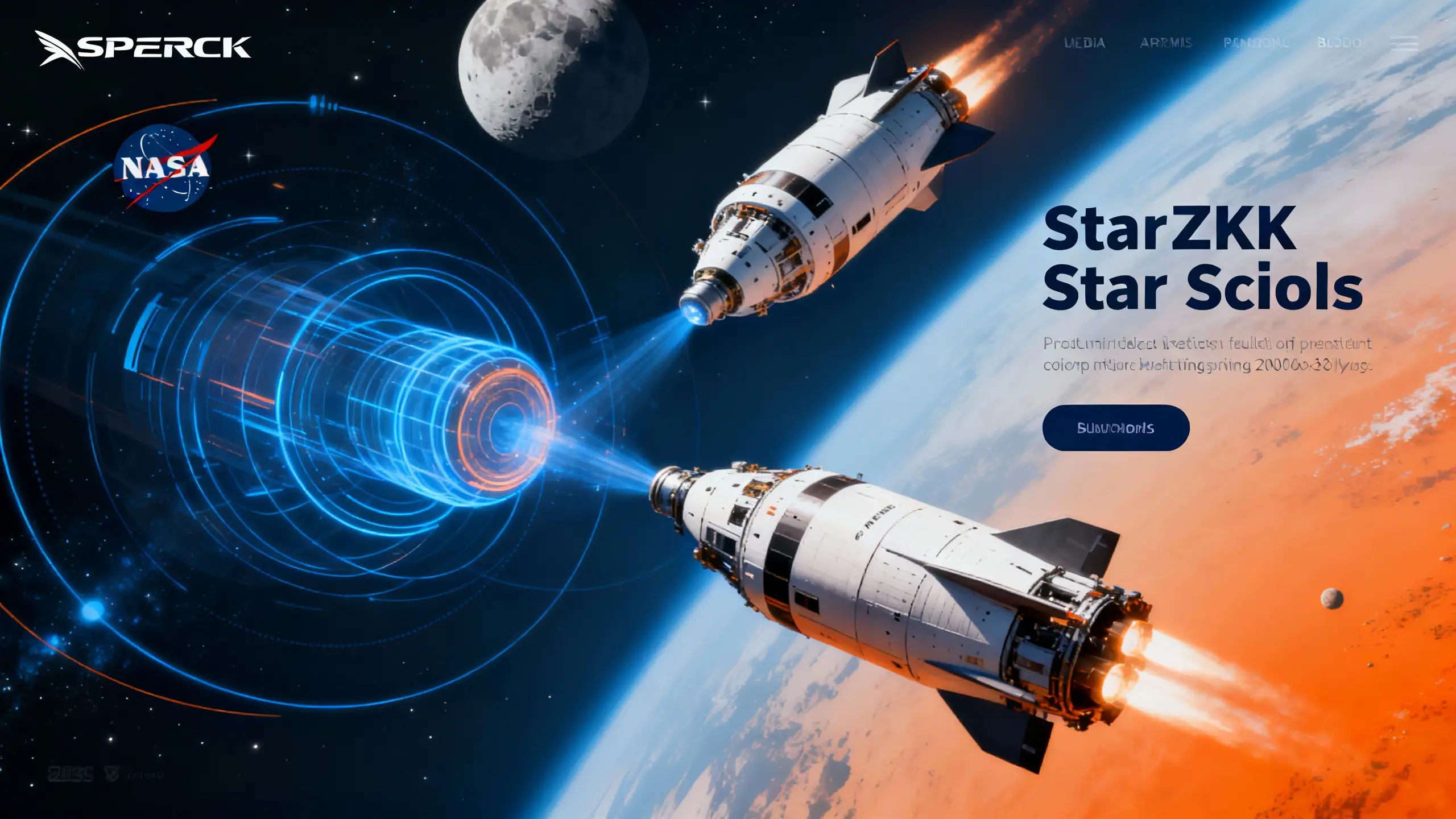
According to Space News reporting, the demonstration mission will involve a "target" Starship launching first into orbit, followed three to four weeks later by a "chaser" Starship that will rendezvous and dock. The two vehicles will dock belly-to-belly and transfer propellants before separating and deorbiting. This mission has already passed a flight system review examining the overall architecture and key subsystems, demonstrating SpaceX's progress toward this critical capability.
The orbital refueling capability is essential not just for Artemis III, but for the broader vision of sustainable space exploration. By enabling Starship to refuel in orbit, SpaceX can launch vehicles with minimal propellant, maximizing payload capacity, and then refuel them using dedicated tanker Starships. This architecture dramatically reduces the cost and complexity of deep space missions while enabling capabilities that would be impossible with single-launch vehicles.
The Flight 3 Breakthrough: Intertank Transfer in Microgravity
SpaceX's first major step toward orbital refueling came during Starship's third integrated flight test on March 14, 2024. During this flight, SpaceX successfully demonstrated an intertank cryogenic propellant transfer, moving at least 10 metric tons of liquid oxygen from a header tank at the nose of the vehicle to the main tank at the aft end while in orbit.
According to NASA documentation, the transfer began approximately 24 minutes and 35 seconds into the flight and was completed at 26 minutes and 10 seconds, lasting under 100 seconds. This marked the first demonstration of cryogenic propellant transfer at this scale and provided critical data on fluid dynamics, sloshing, and engine restart feasibility in microgravity.
The test was significant because it validated that cryogenic propellants—liquid oxygen and liquid methane—can be transferred in microgravity conditions. This capability is essential for orbital refueling, as propellants behave differently in space than on Earth. The successful transfer demonstrated that SpaceX's systems can handle the fluid dynamics, thermal management, and control systems necessary for propellant transfer.
NASA confirmed that the test "was successful by all accounts," according to Space News. This validation was crucial for moving forward with the more complex ship-to-ship demonstration planned for 2026.
However, the intertank transfer was just the beginning. Transferring propellants between tanks on the same vehicle is simpler than transferring between two separate vehicles that must dock, align, and maintain connection during transfer. The 2026 demonstration will test these more complex capabilities, including rendezvous, docking, and propellant transfer between separate vehicles.
The 2026 Demonstration: Two Starships Docking in Orbit
The 2026 demonstration represents a quantum leap in complexity from the Flight 3 intertank transfer. According to Wikipedia's Starship Propellant Transfer Demonstration page, the mission will involve two Starships launching to low Earth orbit approximately three to four weeks apart.
The first Starship, designated as the "target," will launch and enter orbit, where it will wait for the second vehicle. The "chaser" Starship will launch weeks later, rendezvous with the target, and dock belly-to-belly. The chaser will then transfer over 10 metric tons of liquid oxygen to the target vehicle using updated connection points, docking probes, and radio-frequency gauging sensors.
This demonstration is designed to validate long-duration orbital storage, boil-off behavior, and thermal management before sustained lunar operations begin. These capabilities are essential because propellants must be stored in orbit for extended periods while tanker Starships launch and dock, and cryogenic propellants naturally boil off over time, requiring thermal management systems.
The mission has already passed a flight system review examining the overall architecture and key subsystems, according to Space News. This review validates that SpaceX's approach is technically sound and that the systems are ready for the demonstration.
However, the demonstration also faces significant challenges. Docking two large vehicles in orbit requires precise navigation and control. Maintaining connection during propellant transfer requires stable docking mechanisms. And managing cryogenic propellants in space requires sophisticated thermal control systems to minimize boil-off.
The Artemis III Architecture: Ten Tanker Launches to the Moon
The orbital refueling capability is essential for NASA's Artemis III mission, which aims to return astronauts to the lunar surface. According to Ars Technica's analysis, the Starship Human Landing System requires approximately ten tanker launches to establish a propellant depot in orbit before the lander can accumulate enough fuel to reach the Moon.
This architecture works as follows: A tanker version of Starship launches into low Earth orbit and serves as a propellant depot. Additional tanker Starships then launch and dock with the depot, offloading their propellant to build up a reservoir. Once sufficient propellant has been accumulated—requiring approximately ten tanker launches—the Starship Human Landing System can dock with the depot, refuel, and proceed to the Moon.
This approach enables Starship to carry massive payloads to the Moon because it doesn't need to carry all propellant from Earth. Instead, it can launch with minimal propellant, maximizing payload capacity, and then refuel in orbit using propellant delivered by dedicated tanker Starships.
However, this architecture also requires rapid reusability. The ten tanker launches must occur relatively quickly to minimize propellant boil-off and enable efficient operations. SpaceX's successful booster catch during Flight 5 demonstrated progress toward the rapid reusability cadence necessary for this architecture, according to Spaceflight Now.
The architecture also requires reliable docking and propellant transfer systems. Each tanker must successfully dock with the depot, transfer propellant, and undock. Any failures in this process could delay or prevent the accumulation of sufficient propellant for the lunar mission.
The Technical Challenges: Docking, Thermal Management, and Boil-Off
Orbital refueling presents numerous technical challenges that SpaceX must overcome. Docking two large vehicles in orbit requires precise navigation, control, and alignment. The vehicles must approach each other carefully, align their docking mechanisms, and maintain connection during propellant transfer.
According to Futurism's analysis, the two Starships will dock belly-to-belly, requiring specialized docking mechanisms and connection points. These systems must be robust enough to maintain connection during propellant transfer while allowing for safe undocking afterward.
Thermal management is another critical challenge. Cryogenic propellants naturally boil off over time, converting from liquid to gas and potentially being lost. This boil-off must be minimized to ensure that sufficient propellant remains available for the lunar mission. SpaceX must develop thermal control systems that can maintain propellants at cryogenic temperatures for extended periods in orbit.
The 2026 demonstration will validate long-duration orbital storage, boil-off behavior, and thermal management, according to Wikipedia's documentation. These validations are essential before sustained lunar operations can begin, as propellants must be stored in orbit for weeks while multiple tanker launches occur.
Propellant transfer itself also presents challenges. Transferring cryogenic liquids in microgravity requires careful management of fluid dynamics, sloshing, and pressure. The transfer systems must be reliable and efficient, minimizing propellant loss during transfer and ensuring accurate measurement of transferred quantities.
The Artemis III Timeline: Ambitious but Achievable
NASA's Artemis III mission is currently targeted for 2026, though this timeline is widely considered ambitious. According to Space Policy Online, Artemis II is scheduled for April 2026 and appears on track, but Artemis III faces significant uncertainty regarding its mid-2027 target date.
The mission requires SpaceX's Starship Human Landing System to demonstrate several critical milestones before Artemis III can launch, including an uncrewed precursor landing on the Moon, liftoff demonstration from the lunar surface, and cryogenic propellant transfer in microgravity between a depot and Starship in orbit.
However, Starship itself has not yet achieved orbital flight, though it has completed three suborbital test flights from Texas. The 2026 orbital refueling demonstration is a critical step toward achieving the capabilities necessary for Artemis III.
After NASA Administrator Sean Duffy pressured SpaceX over Starship delays in November 2025, threatening to reopen the HLS contract to competitors like Blue Origin, SpaceX responded by proposing a "simplified mission architecture" to accelerate the timeline. According to Phys.org reporting, SpaceX claims this approach could enable a faster return to the moon while supporting national priorities.
The timeline remains uncertain, but the 2026 orbital refueling demonstration is a critical milestone that must be achieved before Artemis III can proceed. Success in this demonstration would validate the architecture and enable progress toward the lunar landing mission.
Deep Space Implications: From Moon to Mars
The orbital refueling capability has implications far beyond the Moon. According to Space Eye News, SpaceX's 2026 agenda focuses on demonstrating long-duration performance, propellant transfer, and lunar landing sequences, with orbital refueling serving as the foundational capability that enables both Moon landings and Mars window opportunities.
For Mars missions, orbital refueling is even more critical. Mars missions require significantly more propellant than lunar missions, and carrying all propellant from Earth would be impractical. By refueling in orbit, Starship can maximize payload capacity for Mars missions while enabling the reusable architecture necessary for sustainable interplanetary exploration.
The capability also enables in-situ resource utilization. Future missions could produce propellants on the Moon or Mars using local resources, then use orbital refueling to transfer these propellants to Starships. This approach would dramatically reduce the cost and complexity of deep space missions while enabling sustainable operations.
However, Mars missions also present additional challenges. The longer transit times require more sophisticated thermal management to minimize propellant boil-off. The greater distances require more reliable systems. And the harsher environment requires more robust designs.
The Reusability Revolution: Transforming Space Economics
Orbital refueling is essential for SpaceX's vision of rapid reusability. According to Spaceflight Now, the successful booster catch during Flight 5 demonstrated progress toward the rapid reusability cadence necessary for the refueling architecture.
Rapid reusability enables the tanker launch cadence required for orbital refueling. Multiple tanker Starships must launch relatively quickly to build up the propellant depot, and these vehicles must be reusable to make the architecture economically viable. The ability to catch and reuse boosters dramatically reduces launch costs, making the multiple launches required for refueling economically feasible.
The reusable architecture also enables sustainable operations. Rather than building new vehicles for each mission, SpaceX can reuse Starships and boosters multiple times, dramatically reducing costs. This sustainability is essential for the frequent launches required for orbital refueling and deep space missions.
However, rapid reusability also requires reliable systems. Vehicles must be designed for multiple flights, with systems that can withstand the stresses of launch, landing, and reuse. The orbital refueling demonstration will test these systems in a demanding environment, validating that Starship can handle the rigors of reusable deep space operations.
The Propellant Depot: A Gas Station in Space
The propellant depot represents a fundamental shift in space architecture. Rather than each mission carrying all propellant from Earth, a depot in orbit can accumulate propellant from multiple tanker launches, enabling more efficient and capable missions.
According to Ars Technica's analysis, SpaceX's plan involves launching a tanker version of Starship into low Earth orbit, then conducting multiple successive launches where additional Starships dock with the tanker to offload fuel, building up a propellant reservoir. This rapid reusability approach is essential for aggregating sufficient propellant before the spacecraft departs for the Moon.
The depot architecture enables more efficient operations because it separates propellant delivery from mission execution. Tanker Starships can launch on optimized schedules, building up propellant reserves that are then available for lunar or Mars missions. This separation enables better mission planning and more efficient use of launch resources.
However, the depot also requires sophisticated management. Propellants must be stored for extended periods, requiring thermal control to minimize boil-off. The depot must be able to receive propellant from multiple tankers and transfer it to mission Starships. And the depot must be reliable enough to support critical missions.
The Competition: Blue Origin and Other Approaches
SpaceX's orbital refueling approach is not the only path to deep space exploration. Blue Origin, which lost the initial HLS contract to SpaceX, has continued developing its Blue Moon lunar lander and has proposed alternative architectures. According to Phys.org reporting, NASA's pressure on SpaceX included threats to reopen the HLS contract to competitors, suggesting that alternatives remain viable.
However, SpaceX's approach has advantages. The reusable architecture reduces costs, and the orbital refueling capability enables more capable missions. The rapid development pace, while creating schedule pressure, also demonstrates SpaceX's ability to iterate quickly and solve complex problems.
The competition also highlights the importance of the 2026 demonstration. Success would validate SpaceX's approach and strengthen its position for future contracts. Failure or significant delays could open opportunities for competitors to propose alternative architectures.
The Future: Sustainable Deep Space Exploration
The orbital refueling capability represents a fundamental shift toward sustainable deep space exploration. By enabling reusable vehicles that can refuel in orbit, SpaceX creates an architecture that can support frequent missions to the Moon and eventually Mars.
According to Space Eye News, SpaceX's 2026 agenda focuses on demonstrating the capabilities necessary for sustainable operations. The orbital refueling demonstration is a critical step, validating that Starship can support the reusable architecture necessary for frequent deep space missions.
The capability also enables in-situ resource utilization. Future missions could produce propellants on the Moon or Mars, then use orbital refueling to transfer these propellants to Starships. This approach would dramatically reduce the cost and complexity of deep space missions while enabling truly sustainable operations.
However, sustainable operations also require reliable systems. The orbital refueling demonstration will test these systems in a demanding environment, validating that Starship can handle the rigors of reusable deep space operations. Success in this demonstration would mark a significant milestone toward sustainable deep space exploration.
Conclusion: A Pivotal Moment in Space Exploration
SpaceX's 2026 orbital refueling demonstration represents a pivotal moment in space exploration. The capability to refuel vehicles in orbit transforms Starship from a single-launch vehicle into a reusable transport system capable of deep space missions to the Moon and eventually Mars.
The demonstration is critical for NASA's Artemis III mission, which requires approximately ten tanker launches to establish a propellant depot in orbit before the Starship Human Landing System can reach the Moon. Success in this demonstration would validate the architecture and enable progress toward returning astronauts to the lunar surface.
However, the demonstration also faces significant challenges. Docking two large vehicles in orbit, managing cryogenic propellants in space, and maintaining thermal control to minimize boil-off all present technical difficulties that must be overcome. The 2026 demonstration will test these capabilities in a real-world environment, providing critical data for future missions.
The implications extend far beyond the Moon. The orbital refueling capability enables sustainable deep space exploration, supporting frequent missions to the Moon and eventually Mars. The reusable architecture reduces costs, and the ability to refuel in orbit enables more capable missions than would be possible with single-launch vehicles.
As 2026 unfolds and SpaceX prepares for the orbital refueling demonstration, we're witnessing the development of capabilities that could transform space exploration. The "gas station in space" architecture represents a fundamental shift toward sustainable operations, enabling missions that would be impossible with traditional approaches.
One thing is certain: the 2026 demonstration will be a critical test of SpaceX's vision for reusable deep space exploration. Success would validate the architecture and enable progress toward the Moon and Mars. Failure would require rethinking the approach and potentially delay ambitious timelines. But the progress so far—from the Flight 3 intertank transfer to the planned 2026 ship-to-ship demonstration—suggests that SpaceX is on track to achieve this critical capability.
The future of space exploration may depend on the success of this demonstration. If SpaceX can prove that orbital refueling works reliably, it opens pathways to the Moon, Mars, and beyond that were previously impossible. The 2026 demonstration is not just a test—it's a gateway to the future of human space exploration.