
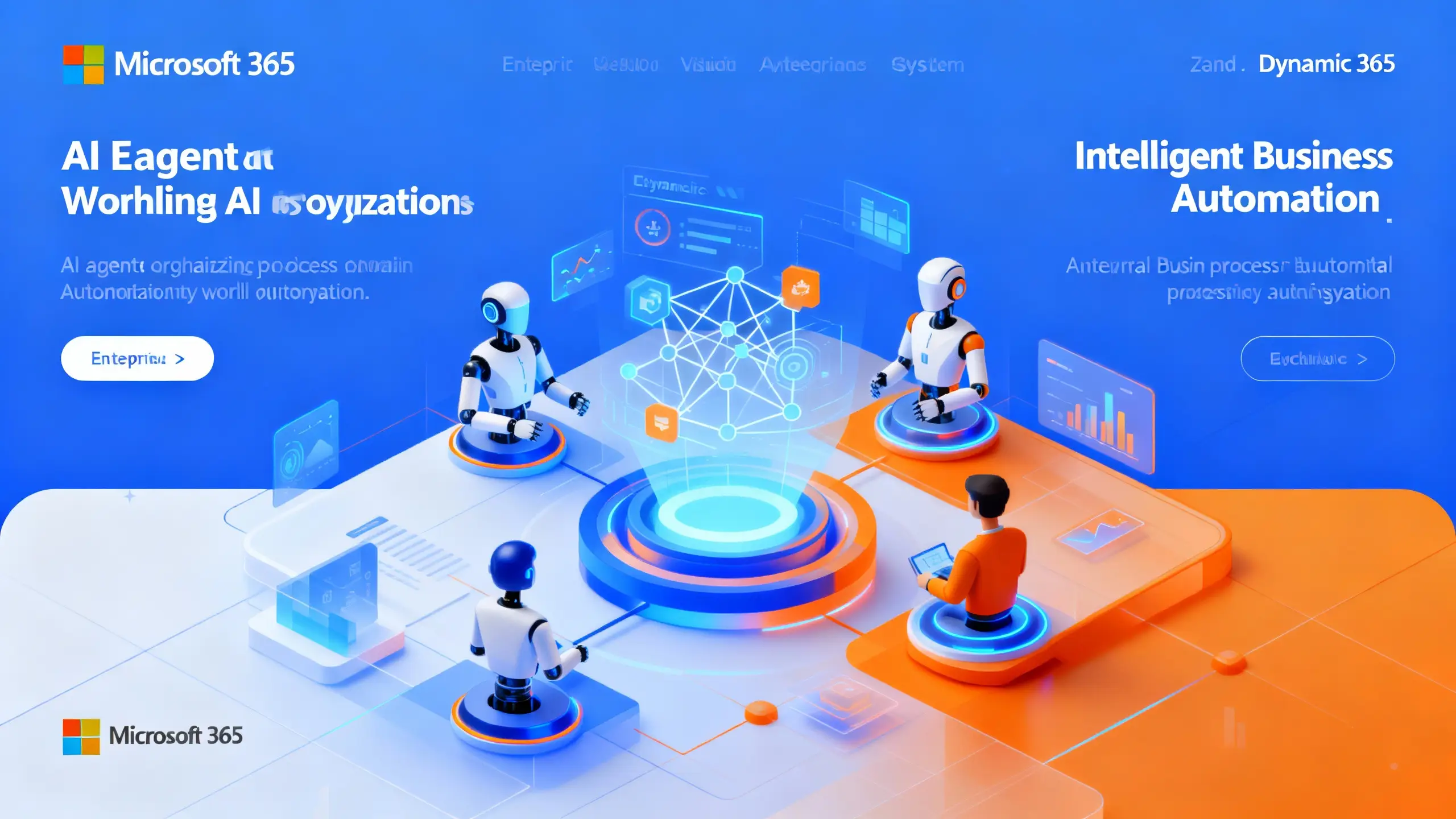
Microsoft has unveiled a major expansion of Copilot Studio that transforms it from a conversational AI assistant into a platform for autonomous agentic workflows. The January 2026 update introduces advanced reasoning capabilities and multi-step task automation that enable AI agents to handle complex business processes across Microsoft 365, Dynamics 365, and third-party enterprise systems without requiring constant human oversight. This represents one of the most significant enterprise AI announcements of early 2026, positioning Microsoft to compete directly with specialized workflow automation platforms while leveraging its existing enterprise software ecosystem.
According to Microsoft's official announcement, the new capabilities allow organizations to create AI agents that can autonomously execute multi-step workflows involving data retrieval, analysis, decision-making, and action execution across multiple systems. The platform now supports autonomous reasoning that enables agents to break down complex tasks into subtasks, make decisions based on context, and adapt workflows dynamically based on changing conditions or new information.
The Evolution from Conversational to Agentic AI
The expansion of Copilot Studio represents a fundamental shift in how enterprise AI systems operate. Traditional conversational AI assistants, including earlier versions of Copilot Studio, were designed to respond to user queries and execute single-step commands. The new agentic capabilities transform these systems into autonomous agents capable of planning, reasoning, and executing complex multi-step workflows independently.
According to TechCrunch's analysis, Microsoft's approach differs from competitors by deeply integrating agentic capabilities with existing Microsoft 365 and Dynamics 365 workflows. Unlike standalone automation platforms that require extensive integration work, Copilot Studio agents can natively access and manipulate data across Microsoft's enterprise software ecosystem, including SharePoint, Teams, Outlook, Excel, Power BI, and Dynamics 365 CRM and ERP systems.
The platform's reasoning engine uses advanced language models to understand business context, break down complex objectives into actionable steps, and make decisions based on available data and business rules. This enables agents to handle scenarios like automatically processing customer service requests, managing approval workflows, generating reports from multiple data sources, and coordinating tasks across different departments and systems.
Multi-Step Workflow Automation: The Technical Breakthrough
The core technical innovation in the Copilot Studio expansion is its ability to orchestrate multi-step workflows that span multiple systems and require conditional logic and decision-making. Traditional automation tools typically require developers to explicitly define every step and condition in a workflow. The new agentic capabilities allow AI agents to dynamically plan and execute workflows based on high-level objectives.
According to The Verge's reporting, Microsoft demonstrated an agent that could autonomously handle a complex customer onboarding process. The agent receives a new customer request, retrieves relevant information from multiple systems, checks compliance requirements, generates necessary documentation, routes approvals to appropriate stakeholders, and updates all relevant systems—all without human intervention until final approval is required.
The system uses a combination of large language model reasoning and structured workflow execution to ensure reliability and predictability. Agents can access real-time data from connected systems, make decisions based on business rules and historical patterns, and adapt their approach when encountering unexpected situations. The platform includes built-in safeguards that require human approval for sensitive actions or when agents encounter scenarios outside their training parameters.
Enterprise Integration and Security
One of Microsoft's key advantages in the agentic AI space is its deep integration with enterprise software ecosystems. According to ZDNet's coverage, the platform leverages Microsoft's existing enterprise security and compliance infrastructure, including Azure Active Directory authentication, role-based access control, and compliance with standards like GDPR, HIPAA, and SOC 2.
The agentic workflows respect existing enterprise permissions and data governance policies. Agents can only access data and perform actions that the authenticated user has permission to access, ensuring that the AI capabilities don't create new security vulnerabilities. Microsoft has also implemented audit logging and monitoring capabilities that track all agent actions, providing transparency and accountability for autonomous AI decisions.
Integration with third-party systems is handled through Microsoft's Power Platform connectors, which already support hundreds of enterprise applications including Salesforce, SAP, ServiceNow, and custom APIs. This allows organizations to create agentic workflows that span their entire technology stack, not just Microsoft products. The platform also supports custom connectors for proprietary systems, enabling organizations to extend agentic capabilities to their unique business processes.
Real-World Business Applications
Early adopters of the new agentic capabilities are reporting significant productivity gains and operational efficiency improvements. According to Microsoft's case studies, a financial services company implemented an agent that autonomously processes loan applications by retrieving credit reports, analyzing financial data, checking compliance requirements, and generating approval recommendations. The agent handles over 70% of routine applications without human intervention, allowing loan officers to focus on complex cases requiring human judgment.
A manufacturing company deployed an agent that monitors production systems, identifies anomalies, retrieves relevant maintenance records, schedules service requests, and coordinates with suppliers when parts need to be ordered. The agent operates 24/7, responding to issues immediately and maintaining detailed logs of all actions taken. This has reduced downtime by approximately 35% and improved maintenance response times from hours to minutes.
In customer service scenarios, agents can autonomously handle complex support requests by accessing customer history, product information, and knowledge bases across multiple systems. The agents can troubleshoot issues, provide solutions, update customer records, and escalate to human agents only when necessary. This has enabled some organizations to handle 40% more support requests with the same staffing levels while improving customer satisfaction scores.
The Competitive Landscape: Microsoft vs. Specialized Platforms
Microsoft's entry into agentic workflow automation places it in direct competition with specialized platforms like UiPath, Automation Anywhere, and newer AI-native platforms like Adept AI and Cognition AI. However, Microsoft's strategy differs significantly by focusing on integration with existing enterprise software rather than creating standalone automation platforms.
According to Gartner's analysis, Microsoft's approach addresses a key challenge in enterprise automation: the complexity of integrating automation tools with existing business systems. Most organizations already use Microsoft 365 and many use Dynamics 365, so Copilot Studio agents can immediately access and work with data in these systems without requiring extensive integration projects.
The platform's natural language interface also lowers the barrier to entry for creating agentic workflows. Business users can describe desired workflows in natural language, and the system generates the necessary agent configuration. This contrasts with traditional automation platforms that typically require technical expertise to build and maintain workflows, making agentic automation accessible to a broader range of users within organizations.
Challenges and Limitations
Despite the significant capabilities, the new agentic features face several challenges and limitations. One concern is the reliability of autonomous decision-making, especially in scenarios involving financial transactions, legal compliance, or safety-critical processes. Microsoft has addressed this by implementing approval gates and human-in-the-loop requirements for sensitive actions, but organizations must carefully configure these safeguards.
According to Ars Technica's technical analysis, the platform's reasoning capabilities, while advanced, are not infallible. Agents may misinterpret context, make suboptimal decisions, or fail to handle edge cases that weren't anticipated during configuration. Organizations need robust testing and monitoring processes to ensure agents operate correctly, especially as they handle increasingly complex and critical workflows.
Another challenge is the cost and computational resources required for agentic AI operations. Each agent action involves multiple API calls to language models and connected systems, which can result in significant costs at scale. Microsoft offers tiered pricing that scales with usage, but organizations need to carefully monitor and optimize agent configurations to control costs while maintaining performance.
The Future of Autonomous Business Operations
Microsoft's expansion of Copilot Studio represents a significant milestone in the evolution of enterprise AI from tools that assist humans to systems that can operate autonomously. The agentic capabilities enable organizations to automate complex, multi-step business processes that previously required human coordination and decision-making.
According to Forrester Research, we're entering an era where AI agents will handle an increasing proportion of routine business operations, allowing human workers to focus on strategic decision-making, creative problem-solving, and tasks requiring emotional intelligence and interpersonal skills. This shift will require organizations to rethink job roles, workflows, and organizational structures to effectively leverage autonomous AI capabilities.
The technology is still in early stages, and we can expect rapid evolution as Microsoft and competitors refine agentic capabilities, improve reasoning reliability, and expand integration options. Organizations that begin experimenting with agentic workflows now will be better positioned to leverage more advanced capabilities as they emerge, while those that wait may find themselves at a competitive disadvantage.
Conclusion: Transforming Enterprise Operations Through Autonomous AI
Microsoft's expansion of Copilot Studio with agentic workflow capabilities represents a fundamental shift in how enterprise software operates. The ability to create AI agents that can autonomously plan, reason, and execute complex multi-step workflows across multiple systems opens new possibilities for business automation and operational efficiency.
The deep integration with Microsoft 365 and Dynamics 365, combined with support for third-party systems through Power Platform connectors, positions Microsoft as a strong competitor in the agentic AI space. While challenges around reliability, cost, and complexity remain, the platform's natural language interface and enterprise-grade security make agentic automation more accessible than previous generations of automation technology.
As organizations begin deploying agentic workflows, we'll see a transformation in how business operations are structured and executed. The combination of autonomous AI capabilities with human oversight and strategic decision-making will define the next phase of enterprise productivity, with Microsoft's Copilot Studio playing a central role in this evolution.